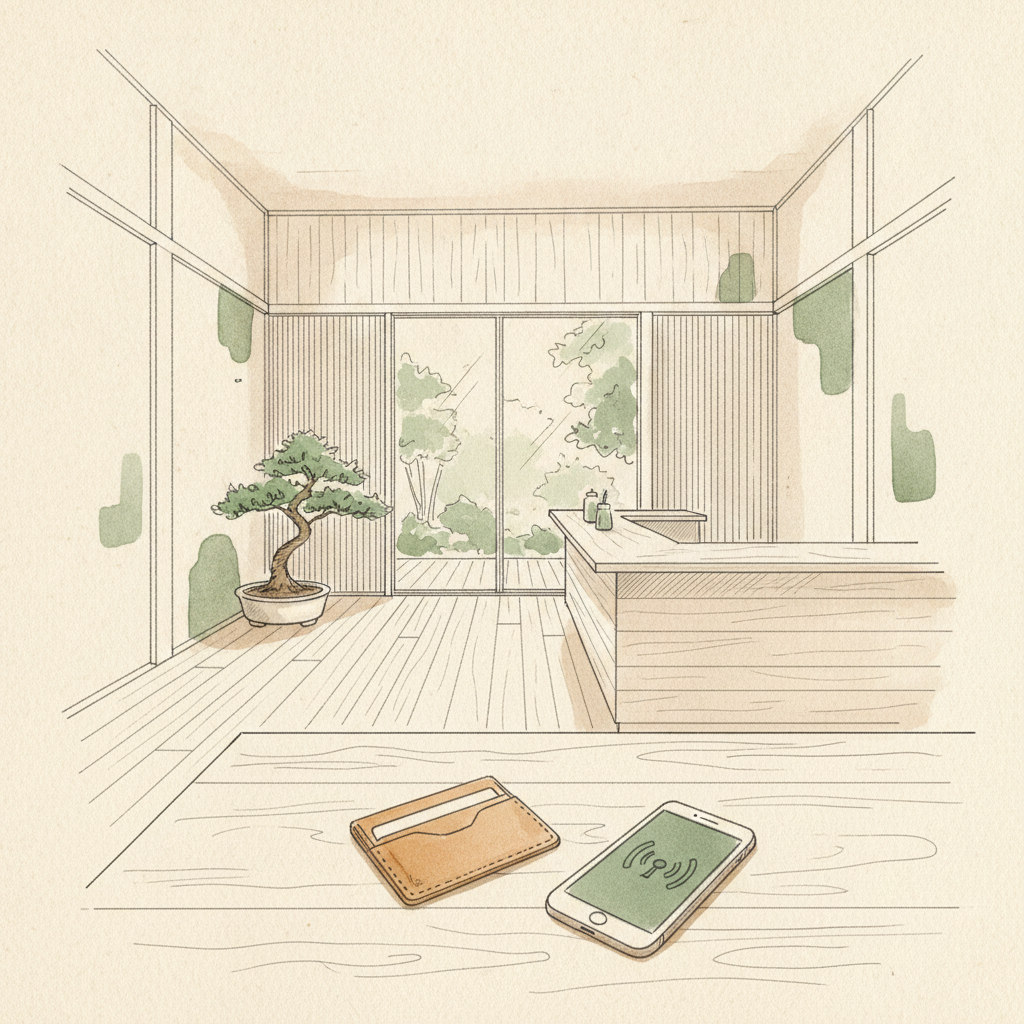
The rhythmic hum of the Shinkansen, a silver blur against the muted greens of the Japanese countryside, offers a unique workspace. Here, amidst the quiet efficiency, the digital nomad seeks not distraction, but connection—a seamless, unobtrusive link to their work.
This pursuit of quiet focus in transit, or within the hushed corners of a Tokyo cafe, redefines the essentials of travel. It shifts the focus from bulky gadgets to embedded technologies and meticulously chosen everyday objects, echoing a deeper Japanese sensibility towards intentionality.
Rethinking Connectivity: eSIM and the Invisible Link
The era of juggling physical SIM cards and tethering to a pocket Wi-Fi router is quietly receding. For the mindful traveler in Japan, an eSIM offers an elegant solution, providing reliable, high-speed data without the physical clutter or constant charging.
- Seamless Activation: Configure your data plan digitally before arrival, activating it upon landing. This bypasses airport queues and the search for local providers.
- Dual SIM Capability: Many modern phones allow an eSIM alongside a physical SIM, ideal for maintaining a home number while accessing local Japanese data.
- Reliable Coverage: Major Japanese carriers offer robust 4G and 5G networks, ensuring consistent connectivity even in more remote areas. This is crucial for remote work on the go.
“True freedom in travel is not the absence of connection, but the ability to connect with quiet efficiency, leaving the mind free for observation and creation.”
The Geometry of Essentials: Curating Your Carry
With digital connectivity streamlined, attention turns to the physical objects that remain. A minimalist carry philosophy, deeply resonant with Japanese aesthetics, prioritizes function, durability, and a refined sense of order. This extends from personal items to work tools.
- Compact Organizers: Opt for slim leather organizers crafted from materials like Japanese pit-tanned leather. These keep cards, cash, and essential documents secure without adding bulk, reflecting an appreciation for enduring quality.
- Multi-Purpose Tools: Each item in your bag should serve multiple functions or be indispensable. This disciplined approach reduces weight and mental clutter, allowing for greater agility.
- Thoughtful Materials: Choose items made from natural, resilient materials that age gracefully. This aligns with the Wabi-sabi principle of finding beauty in imperfection and the passage of time.
Quiet Workspaces: Where Data Meets Focus
Japan offers a multitude of environments conducive to focused work, from serene cafes to the surprisingly productive atmosphere of a long-distance train. Reliable mobile data, facilitated by an eSIM, transforms these transient spaces into effective offices.
- Cafe Culture: Many cafes, particularly in larger cities, provide a tranquil backdrop for focused tasks. The hushed conversations and the aroma of roasted coffee create a conducive environment.
- Train Carriages: The quiet car on a Shinkansen or a local express train can be an ideal place for deep work. The steady motion and limited distractions encourage concentration, supported by robust mobile data.
- Co-working Spaces: For longer stays, dedicated co-working spaces offer stable internet, ergonomic setups, and a professional atmosphere, often with day-pass options. For more insights on navigating these spaces, consider exploring The Slowmad’s Sojourn: Navigating Japan’s Digital Landscape and Quiet Workspaces.
The Art of Unburdening
Reducing physical and digital friction allows for a deeper engagement with the experience of Japan. It frees the traveler from constant logistical concerns, opening space for observation, reflection, and creative thought.
This intentional approach to travel and work mirrors a broader philosophy of living with less, where each possession, digital or physical, serves a clear purpose. It fosters a quiet efficiency, allowing the journey itself to become part of the creative process.
Embracing this unencumbered way allows the digital nomad to move through Japan not as a hurried visitor, but as a participant, seamlessly integrated into its rhythms. The focus shifts from what is carried to what is experienced, observed, and created. For further insights into minimalist carry, consider The Geometry of Essentials: Japanese Leather and the Art of Carrying Less.
Field Notes & Reference
Explore the Companion Monograph & Curated Objects
For readers seeking deeper specifications, archival care notes, and selected objects crafted in Japan, explore our full reference edition.
Travel & Connectivity
Planning field visits to regional workshops across Japan? We rely on Airalo digital eSIMs for reliable local data and seamless navigation without physical SIM swaps.