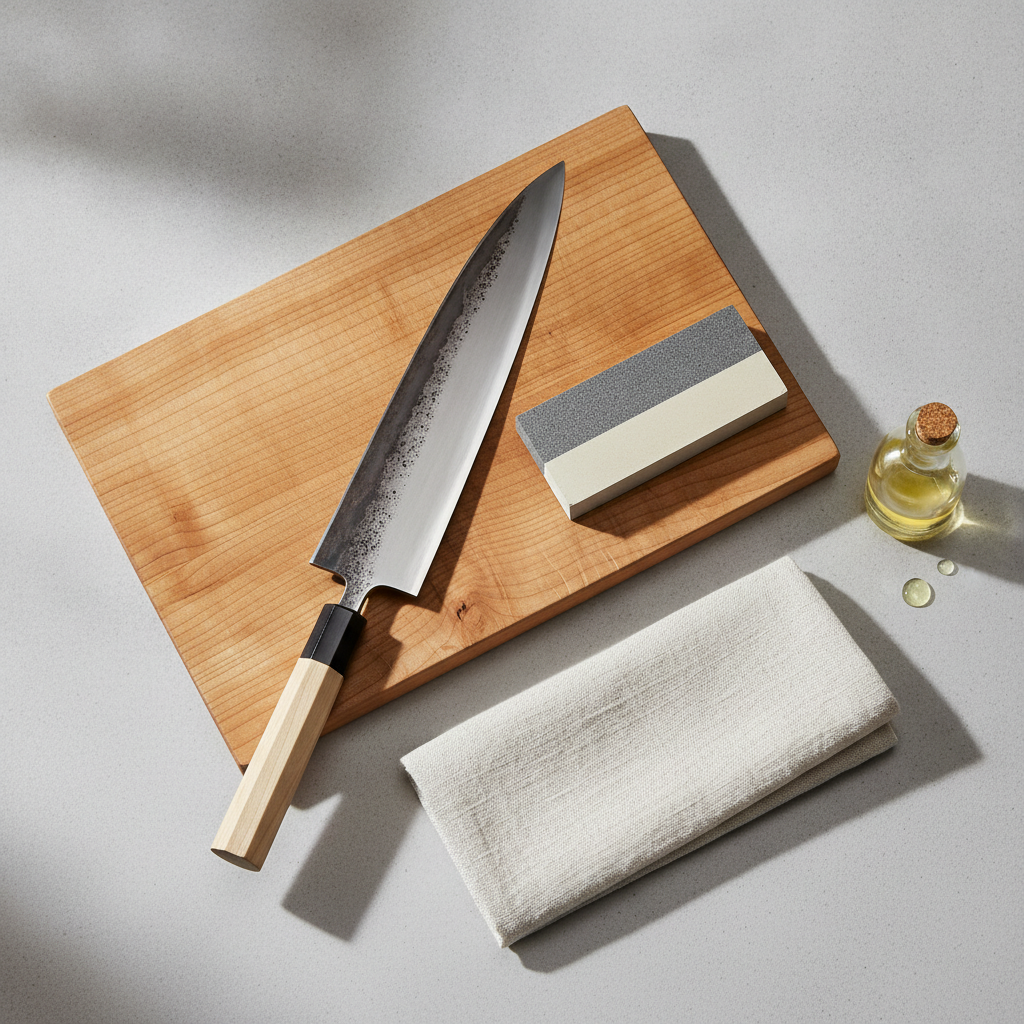
In the realm of culinary tools, few instruments command the reverence and precision of a Japanese carbon steel knife. These aren’t merely utensils; they are extensions of the chef’s hand, embodying centuries of blacksmithing tradition and a philosophy of purpose-driven design.
Their exceptional sharpness and edge retention are legendary, but they demand a different kind of respect and maintenance than their softer stainless steel counterparts. Understanding their unique metallurgy and geometry is the first step towards unlocking their full potential in your kitchen.
The Heart of the Blade: Shirogami and Aogami Steels
Japanese carbon steel knives, or Wa-Bocho, are renowned for their ability to achieve an incredibly fine edge. This is largely due to their composition, often featuring high-carbon white steel (Shirogami) or blue steel (Aogami).
Unlike the softer, more flexible stainless steels common in Western knives, these Japanese carbons are harder and hold a superior edge. They allow for intricate cuts and retain their keenness through demanding tasks, making them a favorite among discerning cooks and professionals.
“The true measure of a blade lies not just in its initial sharpness, but in its capacity to be reawakened, time and again, to its original keenness.”
Asymmetric Geometry: The Single-Bevel Advantage
A defining characteristic of many traditional Japanese knives is their single-bevel, or kataba, geometry. This means only one side of the blade is ground to create the cutting edge, while the other side remains flat or slightly concave.
This asymmetric design allows for an extraordinarily acute edge angle, far sharper than typical double-bevel knives. It enables precision slicing, delicate filleting, and the fine manipulation of ingredients with unparalleled control.
- Right-handed grind: Most single-bevel knives are ground for right-handed users, with the bevel on the right side of the blade. Left-handed versions are available but less common.
- Specialized tasks: This geometry excels in tasks like preparing sushi (Yanagiba), filleting fish (Deba), and finely slicing vegetables (Usuba), where clean, single-pass cuts are paramount.
The Ritual of Sharpening: Whetstone Mastery
Sharpening a Japanese carbon steel knife is less a chore and more a meditative practice. It’s an essential skill that connects the user to the tool, ensuring its longevity and performance. Ditching electric sharpeners for a quality whetstone is crucial.
This process is fundamental to maintaining the extreme sharpness these knives are capable of. It’s a rewarding skill that deepens one’s appreciation for the blade and its capabilities, much like the focused attention given to The Analog Advantage: Japanese Stationery as a Shield Against Digital Burnout.
Step-by-Step Whetstone Routine
For a truly sharp edge, a dual-grit whetstone (e.g., 1000/6000 grit) is ideal. Always start by soaking your whetstone in water until it stops bubbling.
- 1000-Grit (Coarse Side): Begin with the coarser side to establish the primary bevel. Hold the knife at a consistent, low angle (typically 10-15 degrees for single-bevel knives), maintaining even pressure.
- Burr Formation: Sharpen one side until a slight burr forms along the opposite edge. You can feel this tiny wire edge by gently running your fingertip away from the cutting edge.
- Refining the Burr: Flip the knife and, for a single-bevel, lightly remove the burr with a few gentle passes on the flat side of the blade against the stone. For double-bevel, repeat the sharpening process on the second side until a burr forms, then alternate light passes on both sides to remove it.
- 6000-Grit (Fine Side): Switch to the finer grit side. Repeat the same angle and pressure, focusing on polishing the edge and removing any remaining micro-burrs. This step refines the edge to razor sharpness.
- Stropping: For an even finer edge, consider a leather strop. A few passes will align the microscopic imperfections along the edge, bringing it to its peak sharpness, similar to how careful maintenance enhances The Enduring Legacy: Why Japanese Pit-Tanned Leather Outlasts and Outshines.
Rust Prevention and Care
High-carbon steel, while incredibly sharp, is susceptible to rust and discoloration. This reactivity is part of its character, developing a unique patina over time, but it requires diligent care.
After each use, immediately hand wash and thoroughly dry your knife. Never let it air dry or sit in a sink. A thin layer of food-grade mineral oil applied after drying will provide an additional barrier against moisture, preserving its pristine edge.
Embracing Japanese carbon steel knives is an invitation to a more deliberate and rewarding culinary experience. It’s a commitment to craftsmanship, precision, and the mindful practice of sharpening and care.
This journey fosters a deeper connection to the tools we use daily, transforming routine kitchen tasks into moments of focused artistry. The unparalleled performance of a well-maintained Wa-Bocho truly elevates the act of cooking.