Tag: Everyday Carry

  • The Unencumbered Traveler: Digital Flow and Minimalist Carry in Japan

    The Unencumbered Traveler: Digital Flow and Minimalist Carry in Japan

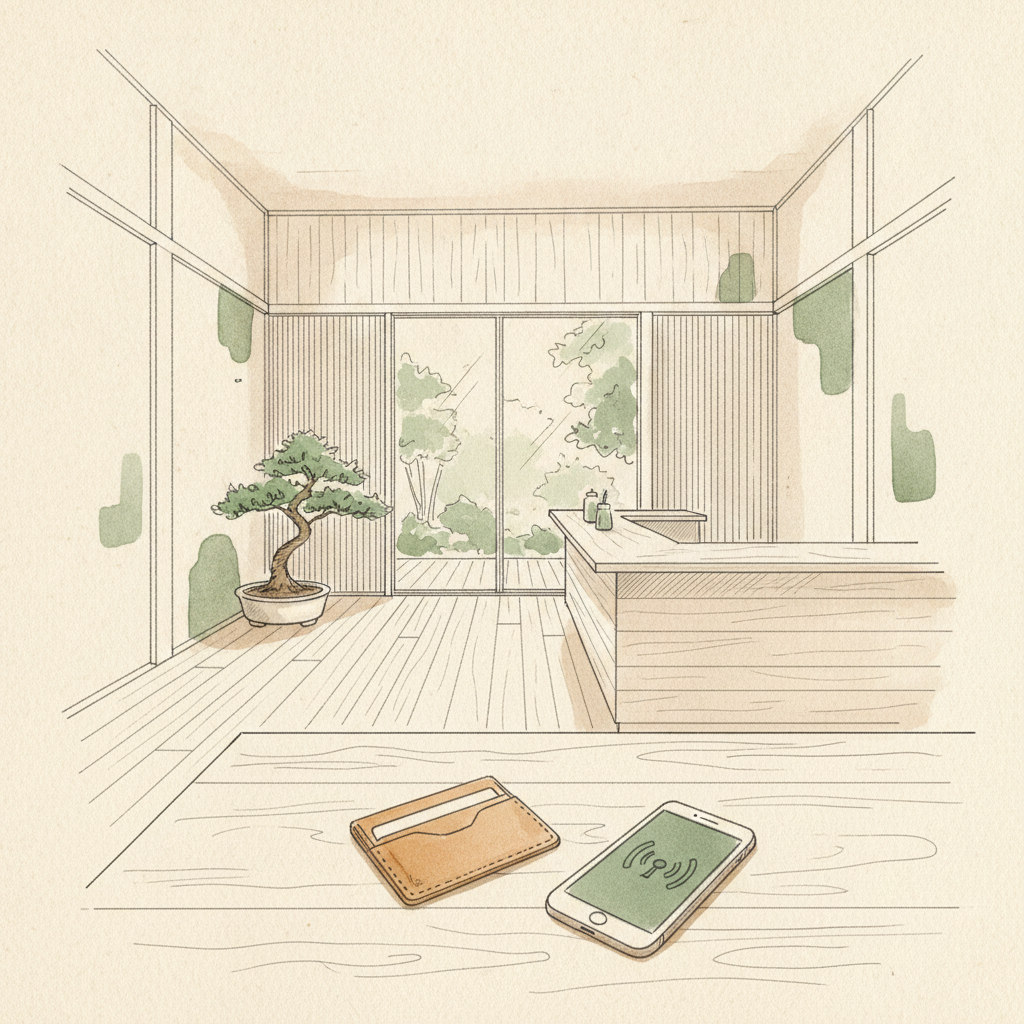
    The rhythmic hum of the Shinkansen, a silver blur against the muted greens of the Japanese countryside, offers a unique workspace. Here, amidst the quiet efficiency, the digital nomad seeks not distraction, but connection—a seamless, unobtrusive link to their work.

    This pursuit of quiet focus in transit, or within the hushed corners of a Tokyo cafe, redefines the essentials of travel. It shifts the focus from bulky gadgets to embedded technologies and meticulously chosen everyday objects, echoing a deeper Japanese sensibility towards intentionality.

    Rethinking Connectivity: eSIM and the Invisible Link

    The era of juggling physical SIM cards and tethering to a pocket Wi-Fi router is quietly receding. For the mindful traveler in Japan, an eSIM offers an elegant solution, providing reliable, high-speed data without the physical clutter or constant charging.

    • Seamless Activation: Configure your data plan digitally before arrival, activating it upon landing. This bypasses airport queues and the search for local providers.
    • Dual SIM Capability: Many modern phones allow an eSIM alongside a physical SIM, ideal for maintaining a home number while accessing local Japanese data.
    • Reliable Coverage: Major Japanese carriers offer robust 4G and 5G networks, ensuring consistent connectivity even in more remote areas. This is crucial for remote work on the go.

    “True freedom in travel is not the absence of connection, but the ability to connect with quiet efficiency, leaving the mind free for observation and creation.”

    The Geometry of Essentials: Curating Your Carry

    With digital connectivity streamlined, attention turns to the physical objects that remain. A minimalist carry philosophy, deeply resonant with Japanese aesthetics, prioritizes function, durability, and a refined sense of order. This extends from personal items to work tools.

    • Compact Organizers: Opt for slim leather organizers crafted from materials like Japanese pit-tanned leather. These keep cards, cash, and essential documents secure without adding bulk, reflecting an appreciation for enduring quality.
    • Multi-Purpose Tools: Each item in your bag should serve multiple functions or be indispensable. This disciplined approach reduces weight and mental clutter, allowing for greater agility.
    • Thoughtful Materials: Choose items made from natural, resilient materials that age gracefully. This aligns with the Wabi-sabi principle of finding beauty in imperfection and the passage of time.

    Quiet Workspaces: Where Data Meets Focus

    Japan offers a multitude of environments conducive to focused work, from serene cafes to the surprisingly productive atmosphere of a long-distance train. Reliable mobile data, facilitated by an eSIM, transforms these transient spaces into effective offices.

    • Cafe Culture: Many cafes, particularly in larger cities, provide a tranquil backdrop for focused tasks. The hushed conversations and the aroma of roasted coffee create a conducive environment.
    • Train Carriages: The quiet car on a Shinkansen or a local express train can be an ideal place for deep work. The steady motion and limited distractions encourage concentration, supported by robust mobile data.
    • Co-working Spaces: For longer stays, dedicated co-working spaces offer stable internet, ergonomic setups, and a professional atmosphere, often with day-pass options. For more insights on navigating these spaces, consider exploring The Slowmad’s Sojourn: Navigating Japan’s Digital Landscape and Quiet Workspaces.

    The Art of Unburdening

    Reducing physical and digital friction allows for a deeper engagement with the experience of Japan. It frees the traveler from constant logistical concerns, opening space for observation, reflection, and creative thought.

    This intentional approach to travel and work mirrors a broader philosophy of living with less, where each possession, digital or physical, serves a clear purpose. It fosters a quiet efficiency, allowing the journey itself to become part of the creative process.

    Embracing this unencumbered way allows the digital nomad to move through Japan not as a hurried visitor, but as a participant, seamlessly integrated into its rhythms. The focus shifts from what is carried to what is experienced, observed, and created. For further insights into minimalist carry, consider The Geometry of Essentials: Japanese Leather and the Art of Carrying Less.

    Field Notes & Reference

    Explore the Companion Monograph & Curated Objects

    For readers seeking deeper specifications, archival care notes, and selected objects crafted in Japan, explore our full reference edition.

    View the Reference Edition →

    Travel & Connectivity

    Planning field visits to regional workshops across Japan? We rely on Airalo digital eSIMs for reliable local data and seamless navigation without physical SIM swaps.
    Explore Airalo Japan eSIM Plans →

  • Bosai EDC: Japanese Preparedness and the Minimalist Travel Kit

    Bosai EDC: Japanese Preparedness and the Minimalist Travel Kit

    In the quiet hum of a Tokyo train, a subtle observation unfolds: the unburdened ease of commuters. Their bags, often compact and well-organized, hint at a philosophy where essentials are not just carried, but curated with intent. This practice, deeply rooted in Japan’s approach to everyday readiness, offers a compelling blueprint for minimalist travel.

    This isn’t about fear, but foresight. The concept of bosai, or disaster preparedness, permeates daily life, subtly influencing the design of public spaces and personal habits. From this culture emerges the bosai pouch—a small, thoughtfully assembled kit that transcends mere emergency supplies to inform a more intentional way of carrying.

    The Philosophy of Readiness: Beyond Emergency

    Japan’s geographical realities have fostered a profound respect for preparedness. This isn’t just about large-scale disaster response; it’s an ingrained awareness that shapes daily choices, from urban planning to personal effects. The bosai mindset encourages a pragmatic assessment of what is truly necessary.

    “True preparedness isn’t about accumulating; it’s about curating. Each item in a bosai kit serves multiple functions, reflecting a deep understanding of resourcefulness.”

    This philosophy extends naturally to everyday carry. By considering potential contingencies, one can strip away the superfluous, leaving only items that offer genuine utility and peace of mind. It’s a lesson in living lightly, informed by a serious purpose.

    Anatomy of the Bosai Pouch: Compact Utility

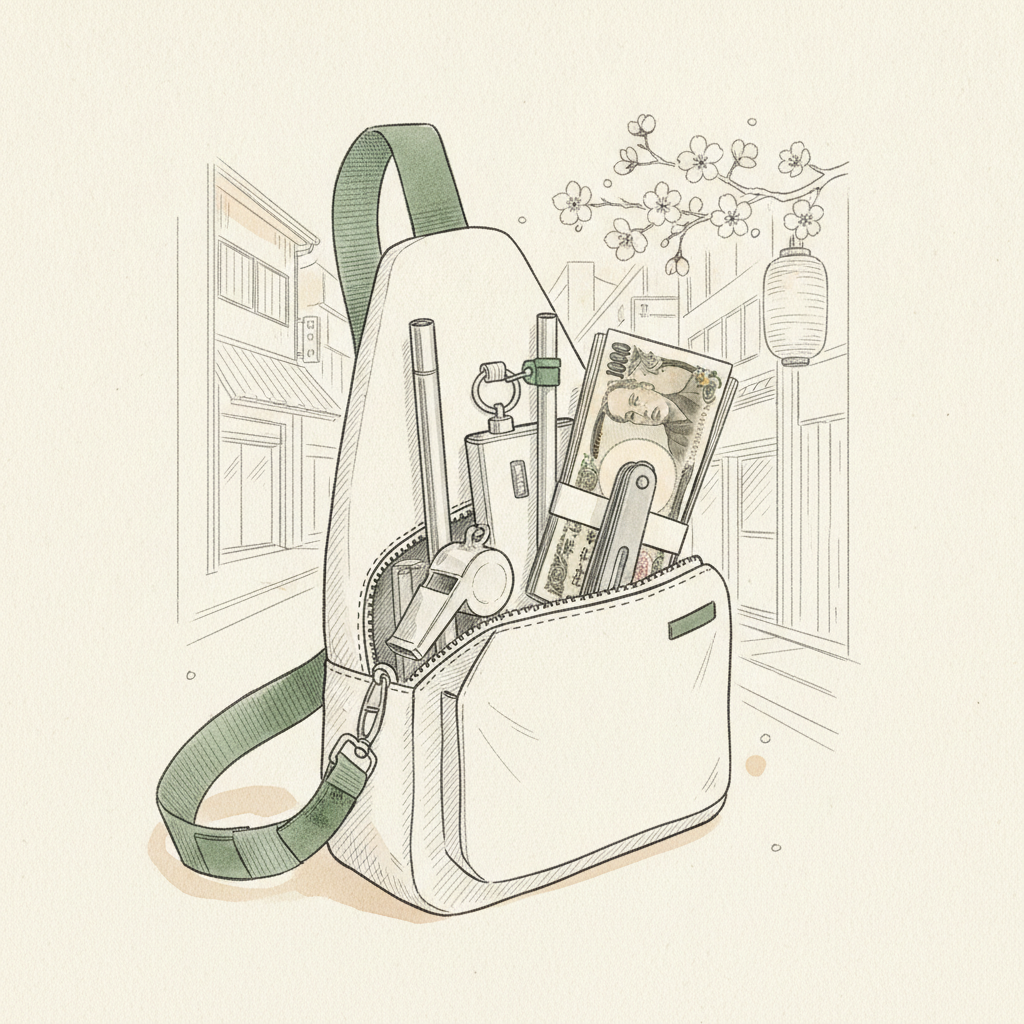
    The bosai pouch is a masterclass in compact efficiency. It is designed to fit seamlessly into a daily bag, providing critical tools without adding significant bulk. The emphasis is always on multi-functionality and robust design, echoing the enduring quality found in Japanese pit-tanned leather longevity care guide.

    • Whistle: Small, high-pitched, for signaling in emergencies.
    • Compact Radio/Charger: Often hand-crank or solar, providing information and device power.
    • Water Filter Straw: Enables safe drinking from various sources.
    • Emergency Cash: Small denominations for situations where digital payments are unavailable.
    • Mini First-Aid Kit: Bandages, antiseptic wipes, pain relievers, and any personal medications.

    These items are chosen for their reliability and minimal footprint. They represent a distilled approach to readiness, applicable whether navigating an urban commute or a remote trail.

    From Bosai to Minimalist Travel: An EDC Blueprint

    Applying the bosai principles to a minimalist travel kit transforms how one packs. The goal shifts from accommodating every perceived need to anticipating core requirements with smart, versatile tools. This approach aligns with the mindful organization explored in The Geometry of Essentials: Japanese Leather and the Art of Carrying Less.

    1. Assess Your Environment: Consider the specific risks and resources of your destination.
    2. Prioritize Multi-Use: Each item should ideally serve more than one function.
    3. Opt for Durability: Choose gear that withstands the rigors of travel and unexpected events.
    4. Maintain Accessibility: Organize your kit so essential items are easily reachable.

    This method encourages a critical evaluation of every item, fostering a deeper connection to one’s possessions. It’s about carrying what truly supports your journey, not what merely fills space.

    The Quiet Confidence of Preparedness

    The ultimate benefit of a bosai-inspired EDC is not just physical readiness, but a profound sense of quiet confidence. Knowing you are equipped for minor inconveniences or significant challenges allows for a more present and engaged experience of the world. It’s a subtle freedom, born from thoughtful preparation.

    This intentional approach to what we carry reflects a larger philosophy of living. It encourages us to consider the enduring value of objects, the wisdom of self-reliance, and the quiet dignity found in being ready for whatever life presents. It’s a journey toward lightness, both in our bags and in our minds.

  • The Geometry of Essentials: Japanese Leather and the Art of Carrying Less

    The Geometry of Essentials: Japanese Leather and the Art of Carrying Less

    In a Kyoto workshop, the scent of vegetable-tanned leather mingles with the faint aroma of cypress. Here, artisans meticulously cut and stitch, transforming thick hides into objects designed for a lifetime of daily use. This process is not merely fabrication; it is a quiet act of intention.

    Each fold and seam anticipates years of pocket friction, body heat, and the subtle patina that tells a story. This approach to carrying essentials reflects a deeper philosophy, one that values durability and considered design over transient trends.

    The Discipline of the Everyday Carry

    The modern world often encourages accumulation, yet the Japanese approach to everyday objects champions restraint. Carrying less is not about deprivation, but about a deliberate curation of tools that serve a purpose and endure. This discipline fosters a clear mind and unburdened movement.

    • Intentionality: Each item in the pocket is chosen for its utility and enduring quality, reflecting a conscious decision to simplify.
    • Ergonomics: Objects are designed to fit the hand and pocket naturally, becoming an extension of the user rather than an extraneous burden.

    Japanese Saddle Leather: A Living Material

    Tochigi leather, known for its dense fibers and deep, natural character, is a prime example of this material philosophy. Unlike chrome-tanned alternatives, its vegetable-tanning process imbues it with a unique ability to develop a rich patina over time. This evolution is a core part of its aesthetic appeal.

    The true beauty of Japanese saddle leather lies not in its initial perfection, but in the stories etched into its surface by the passage of time and touch.

    This material’s structural integrity comes from its natural thickness and the absence of synthetic linings. Hand-stitching, often using methods like saddle stitching, creates a bond stronger than machine-sewn seams, ensuring longevity even under constant stress. For a deeper understanding of these traditional methods, explore “The Enduring Legacy: Why Japanese Pit-Tanned Leather Outlasts and Outshines.”

    • Aging: Body oils and friction from daily use accelerate the darkening and softening of the leather, creating a personalized finish.
    • Durability: The dense cellular structure of vegetable-tanned hides, particularly from regions like Himeji, resists stretching and maintains its form over decades.

    The Architecture of a Minimal Wallet

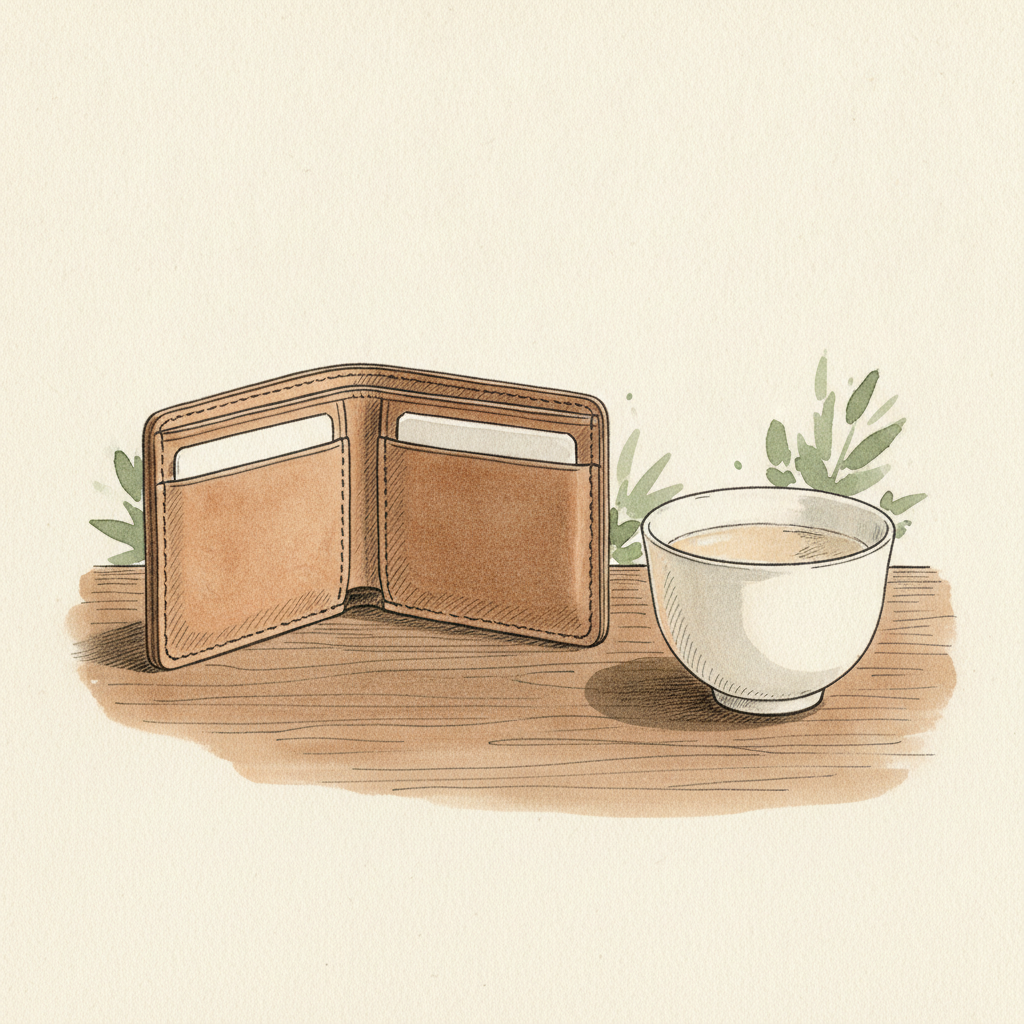
    A slim, hand-stitched wallet crafted from Japanese saddle leather is more than just a container for currency. It is a miniature architectural piece, designed to hold only the absolute essentials. This design choice encourages a daily edit of pocket contents, fostering a habit of mindful selection.

    1. Assess: Before leaving the house, review wallet contents. Remove unnecessary cards, receipts, or loyalty programs not relevant for the day.
    2. Organize: Arrange essential cards (ID, primary credit card, transit pass) for quick access, reducing fumbling.
    3. Maintain: Periodically clean and condition the leather with a natural balm, ensuring its suppleness and extending its life.

    This deliberate practice resonates with the principles of focus and efficiency found in “Ma and the Mindful Workspace: Cultivating Focus Through Japanese Minimalism.” The compact form factor reduces bulk and encourages a leaner approach to daily carry.

    Cultivating a Lifelong Companion

    The relationship with a well-made leather object is a quiet, evolving partnership. It becomes a tactile record of journeys, decisions, and daily rhythms. This philosophy extends beyond wallets to other everyday items, encouraging a similar discernment in all aspects of life.

    Choosing objects built to last, that improve with age and use, is a subtle act of resistance against disposability. It is a commitment to quality, a respect for craftsmanship, and an embrace of a slower, more intentional way of living.

    Field Notes & Reference

    Explore the Companion Monograph & Curated Objects

    For readers seeking deeper specifications, archival care notes, and selected objects crafted in Japan, explore our full reference edition.

    View the Reference Edition →