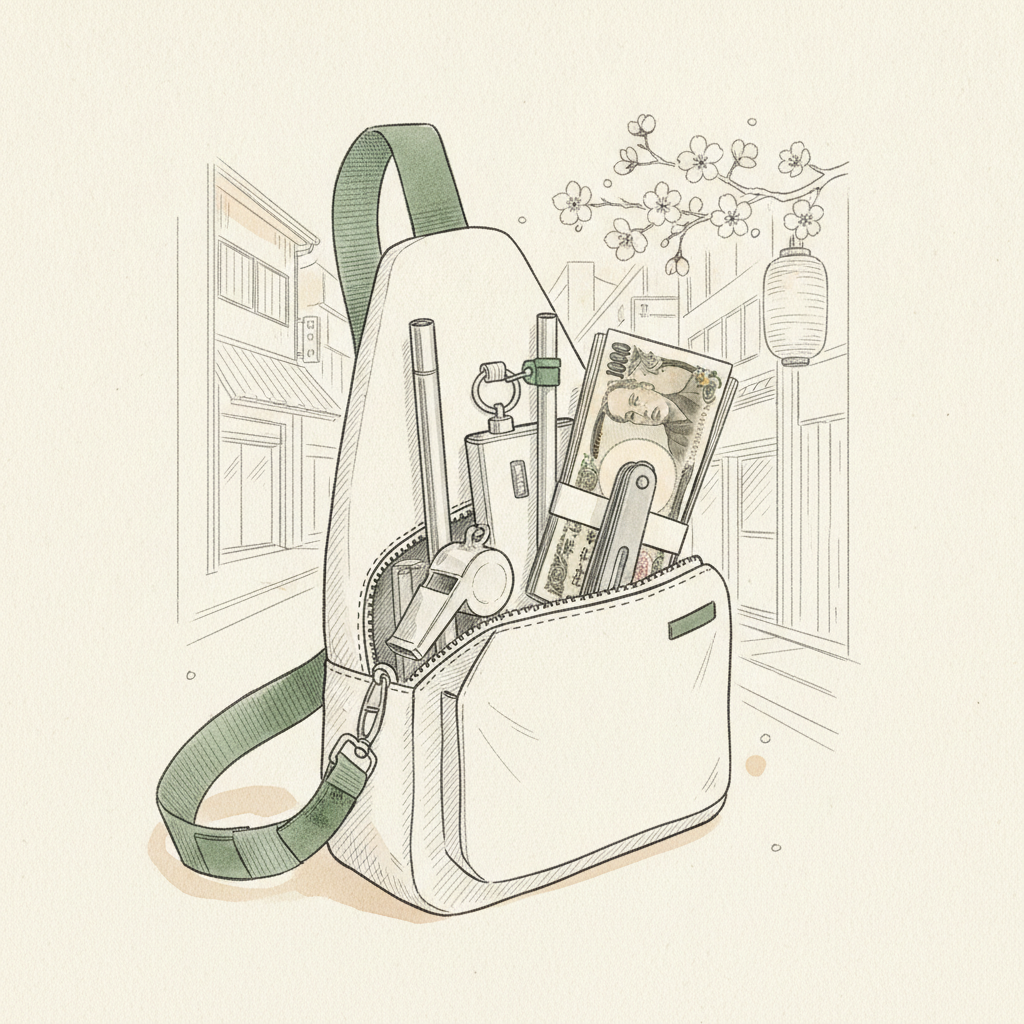
In the quiet hum of a Tokyo train, a subtle observation unfolds: the unburdened ease of commuters. Their bags, often compact and well-organized, hint at a philosophy where essentials are not just carried, but curated with intent. This practice, deeply rooted in Japan’s approach to everyday readiness, offers a compelling blueprint for minimalist travel.
This isn’t about fear, but foresight. The concept of bosai, or disaster preparedness, permeates daily life, subtly influencing the design of public spaces and personal habits. From this culture emerges the bosai pouch—a small, thoughtfully assembled kit that transcends mere emergency supplies to inform a more intentional way of carrying.
The Philosophy of Readiness: Beyond Emergency
Japan’s geographical realities have fostered a profound respect for preparedness. This isn’t just about large-scale disaster response; it’s an ingrained awareness that shapes daily choices, from urban planning to personal effects. The bosai mindset encourages a pragmatic assessment of what is truly necessary.
“True preparedness isn’t about accumulating; it’s about curating. Each item in a bosai kit serves multiple functions, reflecting a deep understanding of resourcefulness.”
This philosophy extends naturally to everyday carry. By considering potential contingencies, one can strip away the superfluous, leaving only items that offer genuine utility and peace of mind. It’s a lesson in living lightly, informed by a serious purpose.
Anatomy of the Bosai Pouch: Compact Utility
The bosai pouch is a masterclass in compact efficiency. It is designed to fit seamlessly into a daily bag, providing critical tools without adding significant bulk. The emphasis is always on multi-functionality and robust design, echoing the enduring quality found in Japanese pit-tanned leather longevity care guide.
- Whistle: Small, high-pitched, for signaling in emergencies.
- Compact Radio/Charger: Often hand-crank or solar, providing information and device power.
- Water Filter Straw: Enables safe drinking from various sources.
- Emergency Cash: Small denominations for situations where digital payments are unavailable.
- Mini First-Aid Kit: Bandages, antiseptic wipes, pain relievers, and any personal medications.
These items are chosen for their reliability and minimal footprint. They represent a distilled approach to readiness, applicable whether navigating an urban commute or a remote trail.
From Bosai to Minimalist Travel: An EDC Blueprint
Applying the bosai principles to a minimalist travel kit transforms how one packs. The goal shifts from accommodating every perceived need to anticipating core requirements with smart, versatile tools. This approach aligns with the mindful organization explored in The Geometry of Essentials: Japanese Leather and the Art of Carrying Less.
- Assess Your Environment: Consider the specific risks and resources of your destination.
- Prioritize Multi-Use: Each item should ideally serve more than one function.
- Opt for Durability: Choose gear that withstands the rigors of travel and unexpected events.
- Maintain Accessibility: Organize your kit so essential items are easily reachable.
This method encourages a critical evaluation of every item, fostering a deeper connection to one’s possessions. It’s about carrying what truly supports your journey, not what merely fills space.
The Quiet Confidence of Preparedness
The ultimate benefit of a bosai-inspired EDC is not just physical readiness, but a profound sense of quiet confidence. Knowing you are equipped for minor inconveniences or significant challenges allows for a more present and engaged experience of the world. It’s a subtle freedom, born from thoughtful preparation.
This intentional approach to what we carry reflects a larger philosophy of living. It encourages us to consider the enduring value of objects, the wisdom of self-reliance, and the quiet dignity found in being ready for whatever life presents. It’s a journey toward lightness, both in our bags and in our minds.