Tag: Slow Living

  • Pocket-Sized Autonomy: Crafting a Minimalist Mobile Studio

    Pocket-Sized Autonomy: Crafting a Minimalist Mobile Studio

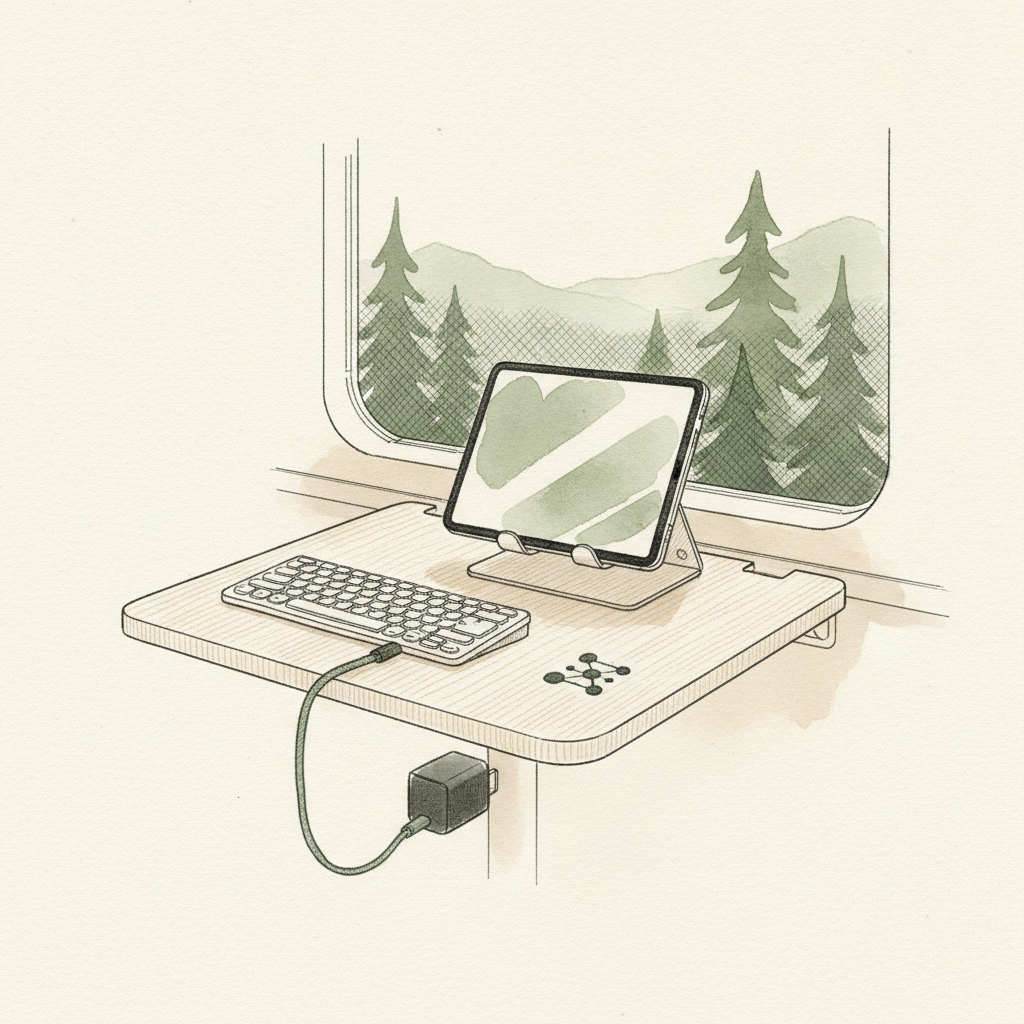
    The rhythmic hum of a Shinkansen carriage, or the quiet corner of a Kyoto kissaten, often becomes the unintended office for those whose work transcends a fixed address. This transient existence demands a careful curation of tools, where every gram and every function is considered.

    It is an exercise in intentionality, mirroring the Japanese aesthetic of mottainai – a deep respect for resources and a disdain for waste. We seek not merely to carry less, but to carry precisely what is needed, and nothing more.

    The Core: iPad Pro and the Unseen Power

    The iPad Pro forms the bedrock of this mobile studio, its versatility replacing a multitude of single-purpose devices. Its processing power handles demanding tasks, while its form factor encourages focused engagement.

    Pairing it with a compact, high-output GaN (Gallium Nitride) charger is crucial. These chargers deliver significant power in a remarkably small footprint, often no larger than a matchbox, eliminating the need for bulky power bricks.

    • Efficiency: GaN technology allows for smaller, cooler, and more efficient power delivery compared to traditional silicon chargers.
    • Universal: A single GaN charger can often power both the iPad and other small devices, reducing cable clutter.
    • Portability: Its diminutive size frees up valuable space in a minimalist carry, aligning with the principles of Bosai EDC: Japanese Preparedness and the Minimalist Travel Kit.

    Input and Connectivity: Precision Without Excess

    Choosing the right keyboard is a personal yet critical decision. Options range from integrated folio keyboards, offering protection and convenience, to compact mechanical keyboards that provide a superior typing experience for extended writing sessions.

    Embedded eSIM technology is the quiet enabler of true mobile autonomy. It negates the need for physical SIM cards or the often-unreliable pocket Wi-Fi routers, ensuring seamless connectivity across borders and networks.

    “True autonomy in work is not about boundless options, but about the elegant simplicity of having exactly what you need, wherever you are.”

    • eSIM Integration: Instant global connectivity without physical hardware, streamlining the setup process in new locations, as explored in The Unencumbered Traveler: Digital Flow and Minimalist Carry in Japan.
    • Keyboard Choice: Folio keyboards offer a sleek, all-in-one solution, while dedicated mechanical keyboards provide tactile feedback for intensive writing.
    • Dongle Elimination: Prioritize accessories that connect directly via USB-C or Bluetooth, minimizing the need for multiple adapters and hubs.

    The Art of Sub-2kg: Intentional Selection

    Achieving a sub-2kg total weight for a complete mobile office requires rigorous selection. Every item must justify its presence, contributing meaningfully to productivity without adding unnecessary bulk.

    This ethos extends beyond electronics to the choice of carrying solutions. A well-designed sleeve or a minimal sling bag can protect devices while maintaining a low profile, rather than a bulky backpack.

    1. Assess Needs: List all essential tasks and identify the minimum tools required to accomplish them effectively.
    2. Prioritize Multi-Function: Opt for devices or accessories that serve multiple purposes, reducing redundancy.
    3. Weigh Everything: Physically weigh items to understand their impact on the total carry weight.

    The Unseen Benefit: Mental Clarity

    Working with fewer, carefully chosen tools fosters a sense of mental clarity. The absence of clutter, both physical and digital, allows for deeper focus and a more intentional approach to work.

    This deliberate minimalism echoes the Ma principle in Japanese aesthetics, emphasizing the significance of empty space. It creates room for thought, allowing ideas to breathe and develop without the distraction of excess.

    Embracing pocket-sized autonomy is more than just a logistical exercise; it is a philosophy. It is about reclaiming agency over one’s work environment, finding quiet productivity in the interstitial spaces of a nomadic life. The result is a lighter physical load and, more profoundly, a lighter mental burden, enabling a sustained, focused engagement with one’s craft.

    Field Notes & Reference

    Explore the Companion Monograph & Curated Objects

    For readers seeking deeper specifications, archival care notes, and selected objects crafted in Japan, explore our full reference edition.

    View the Reference Edition →

    Travel & Connectivity

    Planning field visits to regional workshops across Japan? We rely on Airalo digital eSIMs for reliable local data and seamless navigation without physical SIM swaps.
    Explore Airalo Japan eSIM Plans →

  • Bosai EDC: Japanese Preparedness and the Minimalist Travel Kit

    Bosai EDC: Japanese Preparedness and the Minimalist Travel Kit

    In the quiet hum of a Tokyo train, a subtle observation unfolds: the unburdened ease of commuters. Their bags, often compact and well-organized, hint at a philosophy where essentials are not just carried, but curated with intent. This practice, deeply rooted in Japan’s approach to everyday readiness, offers a compelling blueprint for minimalist travel.

    This isn’t about fear, but foresight. The concept of bosai, or disaster preparedness, permeates daily life, subtly influencing the design of public spaces and personal habits. From this culture emerges the bosai pouch—a small, thoughtfully assembled kit that transcends mere emergency supplies to inform a more intentional way of carrying.

    The Philosophy of Readiness: Beyond Emergency

    Japan’s geographical realities have fostered a profound respect for preparedness. This isn’t just about large-scale disaster response; it’s an ingrained awareness that shapes daily choices, from urban planning to personal effects. The bosai mindset encourages a pragmatic assessment of what is truly necessary.

    “True preparedness isn’t about accumulating; it’s about curating. Each item in a bosai kit serves multiple functions, reflecting a deep understanding of resourcefulness.”

    This philosophy extends naturally to everyday carry. By considering potential contingencies, one can strip away the superfluous, leaving only items that offer genuine utility and peace of mind. It’s a lesson in living lightly, informed by a serious purpose.

    Anatomy of the Bosai Pouch: Compact Utility

    The bosai pouch is a masterclass in compact efficiency. It is designed to fit seamlessly into a daily bag, providing critical tools without adding significant bulk. The emphasis is always on multi-functionality and robust design, echoing the enduring quality found in Japanese pit-tanned leather longevity care guide.

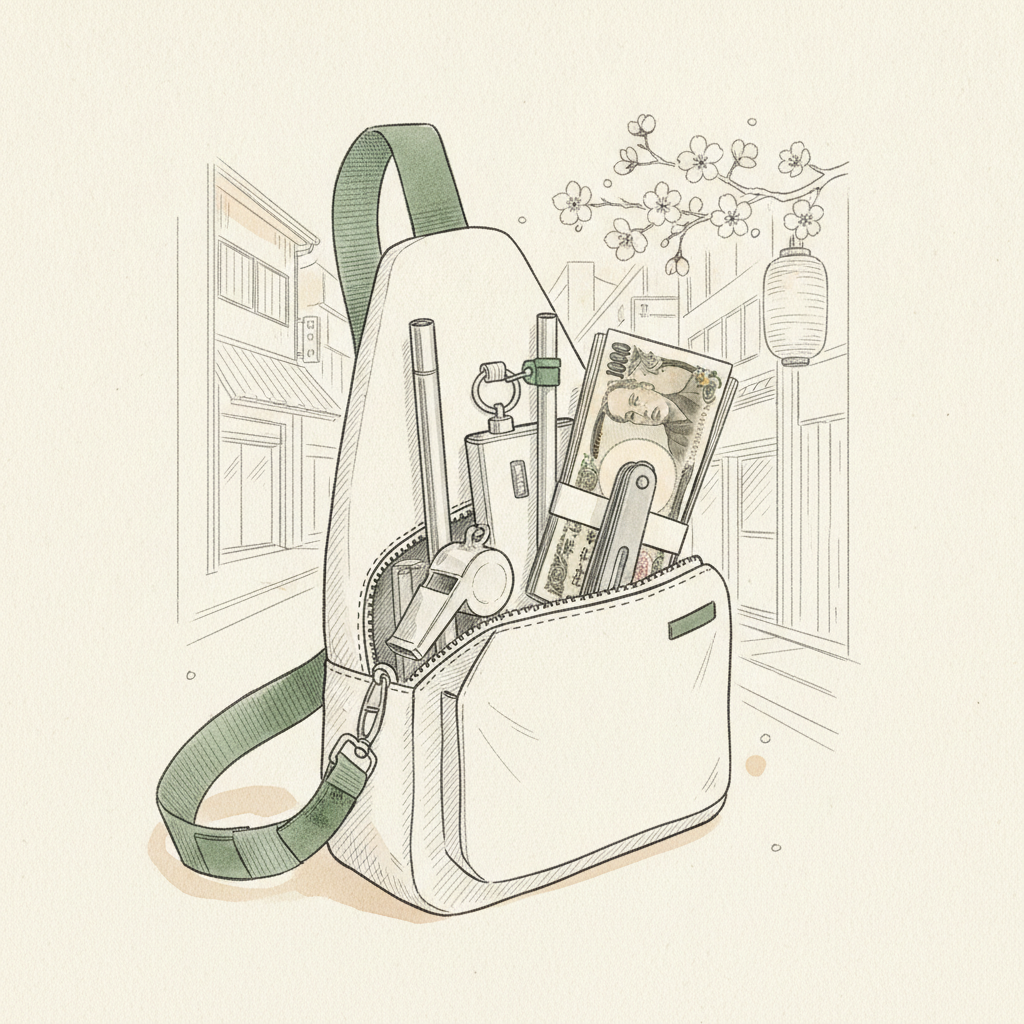
    • Whistle: Small, high-pitched, for signaling in emergencies.
    • Compact Radio/Charger: Often hand-crank or solar, providing information and device power.
    • Water Filter Straw: Enables safe drinking from various sources.
    • Emergency Cash: Small denominations for situations where digital payments are unavailable.
    • Mini First-Aid Kit: Bandages, antiseptic wipes, pain relievers, and any personal medications.

    These items are chosen for their reliability and minimal footprint. They represent a distilled approach to readiness, applicable whether navigating an urban commute or a remote trail.

    From Bosai to Minimalist Travel: An EDC Blueprint

    Applying the bosai principles to a minimalist travel kit transforms how one packs. The goal shifts from accommodating every perceived need to anticipating core requirements with smart, versatile tools. This approach aligns with the mindful organization explored in The Geometry of Essentials: Japanese Leather and the Art of Carrying Less.

    1. Assess Your Environment: Consider the specific risks and resources of your destination.
    2. Prioritize Multi-Use: Each item should ideally serve more than one function.
    3. Opt for Durability: Choose gear that withstands the rigors of travel and unexpected events.
    4. Maintain Accessibility: Organize your kit so essential items are easily reachable.

    This method encourages a critical evaluation of every item, fostering a deeper connection to one’s possessions. It’s about carrying what truly supports your journey, not what merely fills space.

    The Quiet Confidence of Preparedness

    The ultimate benefit of a bosai-inspired EDC is not just physical readiness, but a profound sense of quiet confidence. Knowing you are equipped for minor inconveniences or significant challenges allows for a more present and engaged experience of the world. It’s a subtle freedom, born from thoughtful preparation.

    This intentional approach to what we carry reflects a larger philosophy of living. It encourages us to consider the enduring value of objects, the wisdom of self-reliance, and the quiet dignity found in being ready for whatever life presents. It’s a journey toward lightness, both in our bags and in our minds.

  • The Geometry of Essentials: Japanese Leather and the Art of Carrying Less

    The Geometry of Essentials: Japanese Leather and the Art of Carrying Less

    In a Kyoto workshop, the scent of vegetable-tanned leather mingles with the faint aroma of cypress. Here, artisans meticulously cut and stitch, transforming thick hides into objects designed for a lifetime of daily use. This process is not merely fabrication; it is a quiet act of intention.

    Each fold and seam anticipates years of pocket friction, body heat, and the subtle patina that tells a story. This approach to carrying essentials reflects a deeper philosophy, one that values durability and considered design over transient trends.

    The Discipline of the Everyday Carry

    The modern world often encourages accumulation, yet the Japanese approach to everyday objects champions restraint. Carrying less is not about deprivation, but about a deliberate curation of tools that serve a purpose and endure. This discipline fosters a clear mind and unburdened movement.

    • Intentionality: Each item in the pocket is chosen for its utility and enduring quality, reflecting a conscious decision to simplify.
    • Ergonomics: Objects are designed to fit the hand and pocket naturally, becoming an extension of the user rather than an extraneous burden.

    Japanese Saddle Leather: A Living Material

    Tochigi leather, known for its dense fibers and deep, natural character, is a prime example of this material philosophy. Unlike chrome-tanned alternatives, its vegetable-tanning process imbues it with a unique ability to develop a rich patina over time. This evolution is a core part of its aesthetic appeal.

    The true beauty of Japanese saddle leather lies not in its initial perfection, but in the stories etched into its surface by the passage of time and touch.

    This material’s structural integrity comes from its natural thickness and the absence of synthetic linings. Hand-stitching, often using methods like saddle stitching, creates a bond stronger than machine-sewn seams, ensuring longevity even under constant stress. For a deeper understanding of these traditional methods, explore “The Enduring Legacy: Why Japanese Pit-Tanned Leather Outlasts and Outshines.”

    • Aging: Body oils and friction from daily use accelerate the darkening and softening of the leather, creating a personalized finish.
    • Durability: The dense cellular structure of vegetable-tanned hides, particularly from regions like Himeji, resists stretching and maintains its form over decades.

    The Architecture of a Minimal Wallet

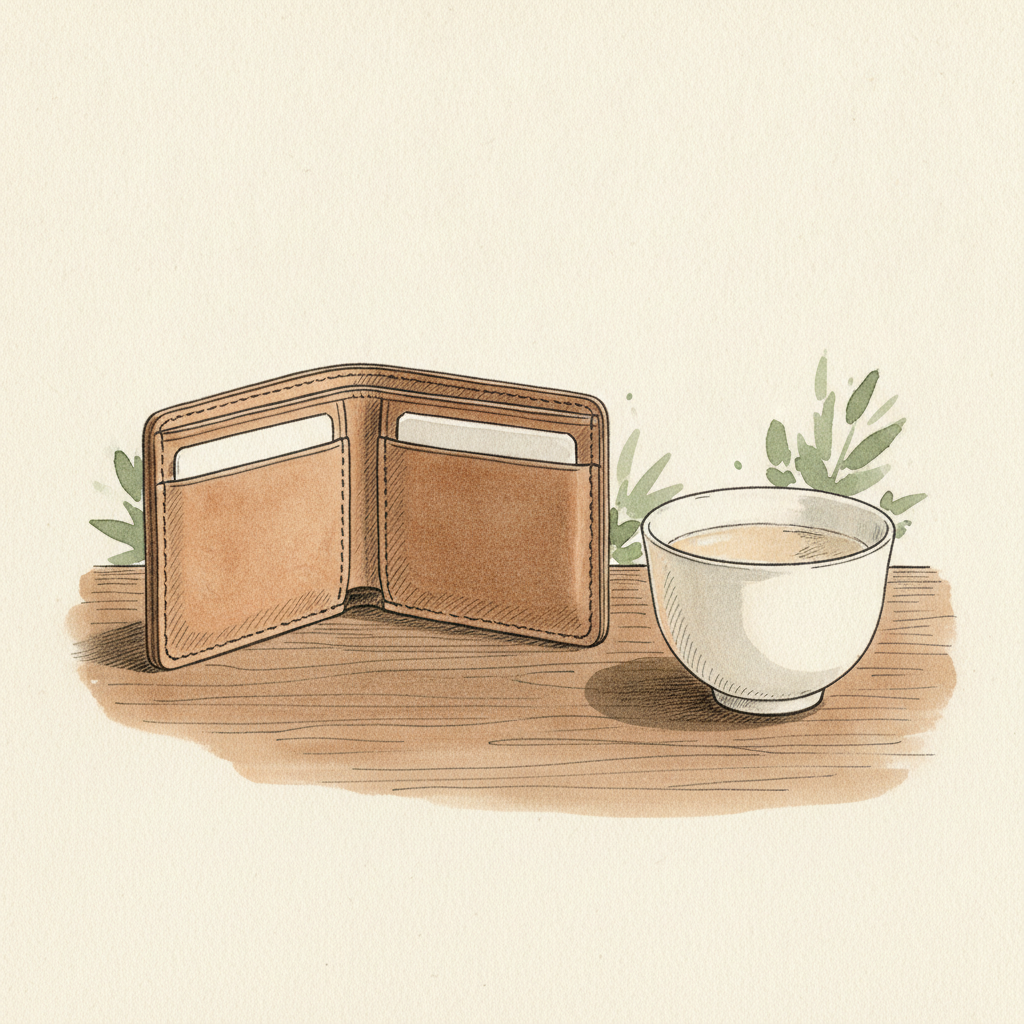
    A slim, hand-stitched wallet crafted from Japanese saddle leather is more than just a container for currency. It is a miniature architectural piece, designed to hold only the absolute essentials. This design choice encourages a daily edit of pocket contents, fostering a habit of mindful selection.

    1. Assess: Before leaving the house, review wallet contents. Remove unnecessary cards, receipts, or loyalty programs not relevant for the day.
    2. Organize: Arrange essential cards (ID, primary credit card, transit pass) for quick access, reducing fumbling.
    3. Maintain: Periodically clean and condition the leather with a natural balm, ensuring its suppleness and extending its life.

    This deliberate practice resonates with the principles of focus and efficiency found in “Ma and the Mindful Workspace: Cultivating Focus Through Japanese Minimalism.” The compact form factor reduces bulk and encourages a leaner approach to daily carry.

    Cultivating a Lifelong Companion

    The relationship with a well-made leather object is a quiet, evolving partnership. It becomes a tactile record of journeys, decisions, and daily rhythms. This philosophy extends beyond wallets to other everyday items, encouraging a similar discernment in all aspects of life.

    Choosing objects built to last, that improve with age and use, is a subtle act of resistance against disposability. It is a commitment to quality, a respect for craftsmanship, and an embrace of a slower, more intentional way of living.

    Field Notes & Reference

    Explore the Companion Monograph & Curated Objects

    For readers seeking deeper specifications, archival care notes, and selected objects crafted in Japan, explore our full reference edition.

    View the Reference Edition →