Author: nmj

  • Deep Listening: The Enduring Allure of Japan’s Jazz Kissa

    Deep Listening: The Enduring Allure of Japan’s Jazz Kissa

    In the hushed backstreets of Tokyo, beyond the neon flicker and hurried pace, a different rhythm persists. Here, behind unassuming doors, the jazz kissa offers sanctuary—a haven where time slows, and the singular purpose is to listen.

    These unique establishments, born from post-war scarcity and a deep reverence for music, cultivate an environment of profound acoustic immersion. They are not merely cafes, but temples dedicated to the analog ritual of sound.

    The Genesis of Deep Listening Spaces

    The jazz kissa emerged in post-war Japan as records were prohibitively expensive, yet a burgeoning appetite for Western jazz culture grew. Owners invested in extensive vinyl collections and high-fidelity sound systems, inviting patrons to experience music communally.

    This necessity fostered a culture of quiet appreciation. Conversation was discouraged, screens were absent, and the focus remained solely on the music. It was, and remains, a deliberate act of single-tasking in an increasingly fragmented world.

    “The jazz kissa is a testament to mindful presence. It’s a space where the external world fades, allowing the internal landscape to recalibrate through sound.”

    Analog Rituals: Sound, Focus, and Restoration

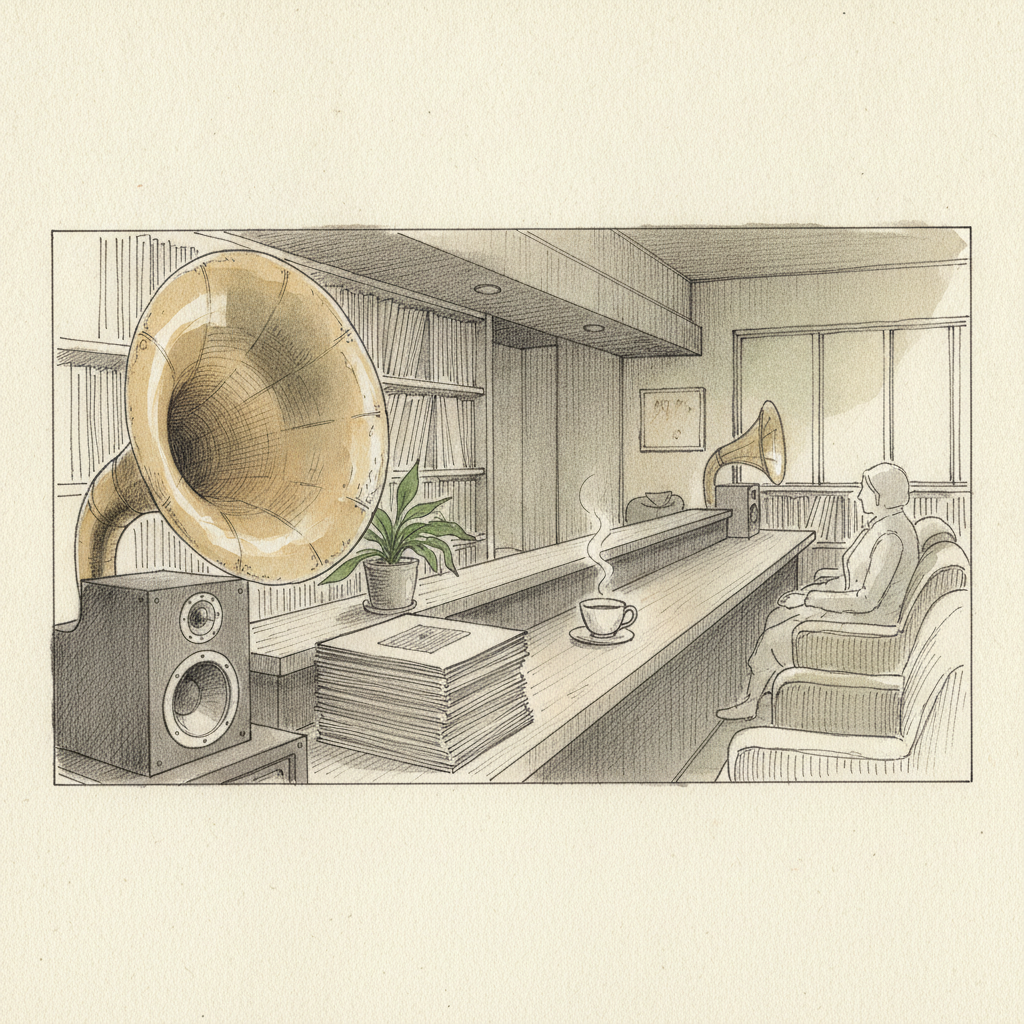
    The appeal of the jazz kissa lies in its deliberate analog experience. Vintage horn speakers, often towering and meticulously maintained, project a warm, enveloping sound that digital formats rarely replicate.

    This tangible warmth, combined with the tactile act of placing a needle on vinyl, engages the senses in a way that promotes focus. For remote workers and creatives, it offers a stark contrast to the digital noise, akin to the quiet concentration found in traditional Japanese craftsmanship.

    • Vinyl Warmth: The distinct sonic character of analog recordings, free from digital compression, provides a richer, more nuanced listening experience.
    • Vintage Horns: These speakers are chosen for their expansive soundstage and ability to reproduce music with a natural, uncolored fidelity.
    • Dim Lighting: Low illumination minimizes visual distractions, guiding attention towards the auditory landscape and fostering a contemplative mood.

    Cultivating a Focused Mindset

    The deliberate environment of a jazz kissa mirrors principles found in other Japanese practices that cultivate focus and presence. It’s about creating a ‘Ma’—a meaningful void or space—where clarity can emerge.

    Just as Ma and the Mindful Workspace: Cultivating Focus Through Japanese Minimalism explores, eliminating external stimuli allows for deeper engagement with the task at hand. Here, the task is simply to listen.

    1. Enter Quietly: Respect the hushed atmosphere upon entry, minimizing disruption to others.
    2. Order Simply: A coffee or tea is customary; focus remains on the music, not elaborate menus.
    3. Listen Actively: Resist the urge to speak or use devices. Allow the music to wash over you, noticing its textures and rhythms.

    Beyond the Kissa: Integrating Deep Listening

    The principles of the jazz kissa extend beyond its physical walls. They offer a blueprint for creating personal spaces conducive to deep work and focused attention, even for those navigating a digital existence.

    Consider how elements like curated soundscapes, intentional screen breaks, and analog tools—perhaps even Japanese stationery as explored in The Analog Advantage: Japanese Stationery as a Shield Against Digital Burnout—can restore mental bandwidth.

    This intentional approach to sound and space is not about escaping modernity, but about mastering it. It’s about carving out pockets of profound stillness, allowing the mind to wander and reconnect, one perfectly reproduced note at a time.

    Travel & Connectivity

    Planning field visits to regional workshops across Japan? We rely on Airalo digital eSIMs for reliable local data and seamless navigation without physical SIM swaps.
    Explore Airalo Japan eSIM Plans →

  • Pocket-Sized Autonomy: Crafting a Minimalist Mobile Studio

    Pocket-Sized Autonomy: Crafting a Minimalist Mobile Studio

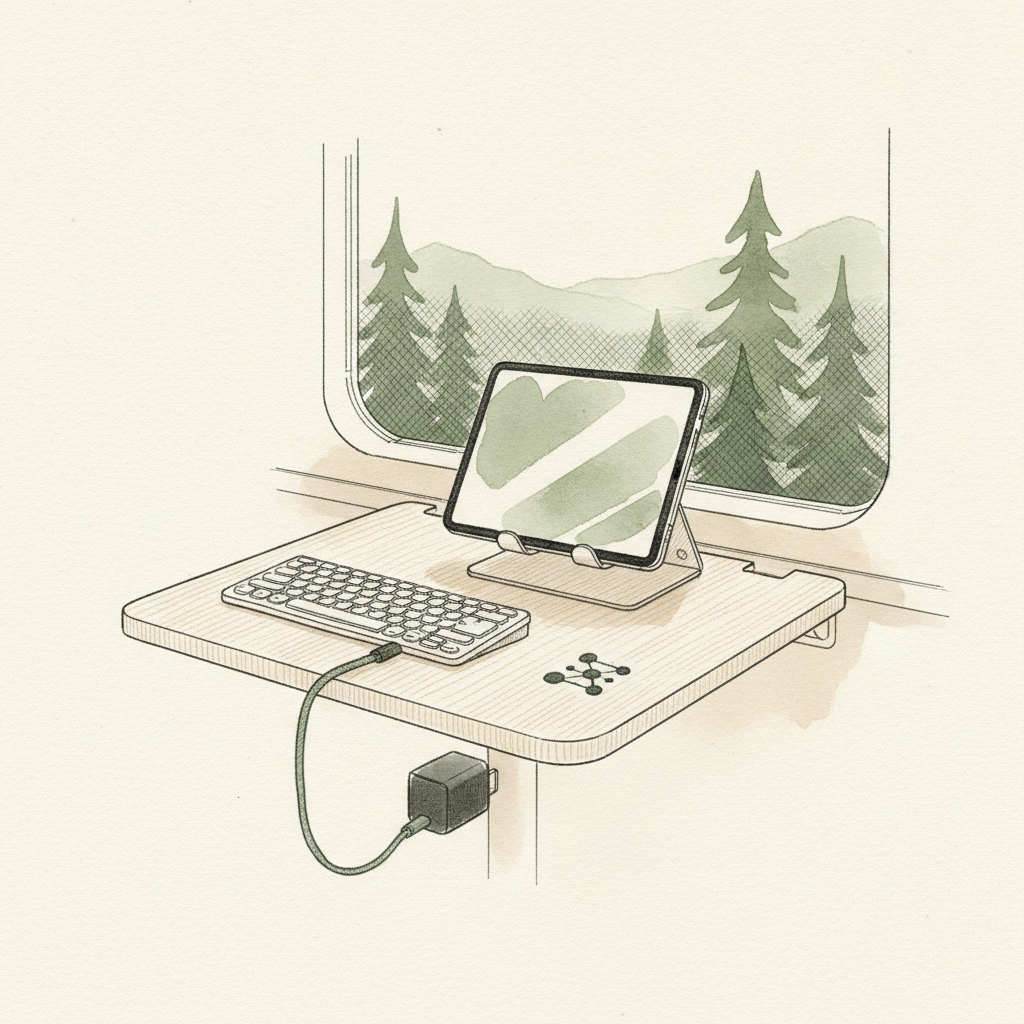
    The rhythmic hum of a Shinkansen carriage, or the quiet corner of a Kyoto kissaten, often becomes the unintended office for those whose work transcends a fixed address. This transient existence demands a careful curation of tools, where every gram and every function is considered.

    It is an exercise in intentionality, mirroring the Japanese aesthetic of mottainai – a deep respect for resources and a disdain for waste. We seek not merely to carry less, but to carry precisely what is needed, and nothing more.

    The Core: iPad Pro and the Unseen Power

    The iPad Pro forms the bedrock of this mobile studio, its versatility replacing a multitude of single-purpose devices. Its processing power handles demanding tasks, while its form factor encourages focused engagement.

    Pairing it with a compact, high-output GaN (Gallium Nitride) charger is crucial. These chargers deliver significant power in a remarkably small footprint, often no larger than a matchbox, eliminating the need for bulky power bricks.

    • Efficiency: GaN technology allows for smaller, cooler, and more efficient power delivery compared to traditional silicon chargers.
    • Universal: A single GaN charger can often power both the iPad and other small devices, reducing cable clutter.
    • Portability: Its diminutive size frees up valuable space in a minimalist carry, aligning with the principles of Bosai EDC: Japanese Preparedness and the Minimalist Travel Kit.

    Input and Connectivity: Precision Without Excess

    Choosing the right keyboard is a personal yet critical decision. Options range from integrated folio keyboards, offering protection and convenience, to compact mechanical keyboards that provide a superior typing experience for extended writing sessions.

    Embedded eSIM technology is the quiet enabler of true mobile autonomy. It negates the need for physical SIM cards or the often-unreliable pocket Wi-Fi routers, ensuring seamless connectivity across borders and networks.

    “True autonomy in work is not about boundless options, but about the elegant simplicity of having exactly what you need, wherever you are.”

    • eSIM Integration: Instant global connectivity without physical hardware, streamlining the setup process in new locations, as explored in The Unencumbered Traveler: Digital Flow and Minimalist Carry in Japan.
    • Keyboard Choice: Folio keyboards offer a sleek, all-in-one solution, while dedicated mechanical keyboards provide tactile feedback for intensive writing.
    • Dongle Elimination: Prioritize accessories that connect directly via USB-C or Bluetooth, minimizing the need for multiple adapters and hubs.

    The Art of Sub-2kg: Intentional Selection

    Achieving a sub-2kg total weight for a complete mobile office requires rigorous selection. Every item must justify its presence, contributing meaningfully to productivity without adding unnecessary bulk.

    This ethos extends beyond electronics to the choice of carrying solutions. A well-designed sleeve or a minimal sling bag can protect devices while maintaining a low profile, rather than a bulky backpack.

    1. Assess Needs: List all essential tasks and identify the minimum tools required to accomplish them effectively.
    2. Prioritize Multi-Function: Opt for devices or accessories that serve multiple purposes, reducing redundancy.
    3. Weigh Everything: Physically weigh items to understand their impact on the total carry weight.

    The Unseen Benefit: Mental Clarity

    Working with fewer, carefully chosen tools fosters a sense of mental clarity. The absence of clutter, both physical and digital, allows for deeper focus and a more intentional approach to work.

    This deliberate minimalism echoes the Ma principle in Japanese aesthetics, emphasizing the significance of empty space. It creates room for thought, allowing ideas to breathe and develop without the distraction of excess.

    Embracing pocket-sized autonomy is more than just a logistical exercise; it is a philosophy. It is about reclaiming agency over one’s work environment, finding quiet productivity in the interstitial spaces of a nomadic life. The result is a lighter physical load and, more profoundly, a lighter mental burden, enabling a sustained, focused engagement with one’s craft.

    Field Notes & Reference

    Explore the Companion Monograph & Curated Objects

    For readers seeking deeper specifications, archival care notes, and selected objects crafted in Japan, explore our full reference edition.

    View the Reference Edition →

    Travel & Connectivity

    Planning field visits to regional workshops across Japan? We rely on Airalo digital eSIMs for reliable local data and seamless navigation without physical SIM swaps.
    Explore Airalo Japan eSIM Plans →

  • The Unencumbered Traveler: Digital Flow and Minimalist Carry in Japan

    The Unencumbered Traveler: Digital Flow and Minimalist Carry in Japan

    The rhythmic hum of the Shinkansen, a silver blur against the muted greens of the Japanese countryside, offers a unique workspace. Here, amidst the quiet efficiency, the digital nomad seeks not distraction, but connection—a seamless, unobtrusive link to their work.

    This pursuit of quiet focus in transit, or within the hushed corners of a Tokyo cafe, redefines the essentials of travel. It shifts the focus from bulky gadgets to embedded technologies and meticulously chosen everyday objects, echoing a deeper Japanese sensibility towards intentionality.

    Rethinking Connectivity: eSIM and the Invisible Link

    The era of juggling physical SIM cards and tethering to a pocket Wi-Fi router is quietly receding. For the mindful traveler in Japan, an eSIM offers an elegant solution, providing reliable, high-speed data without the physical clutter or constant charging.

    • Seamless Activation: Configure your data plan digitally before arrival, activating it upon landing. This bypasses airport queues and the search for local providers.
    • Dual SIM Capability: Many modern phones allow an eSIM alongside a physical SIM, ideal for maintaining a home number while accessing local Japanese data.
    • Reliable Coverage: Major Japanese carriers offer robust 4G and 5G networks, ensuring consistent connectivity even in more remote areas. This is crucial for remote work on the go.

    “True freedom in travel is not the absence of connection, but the ability to connect with quiet efficiency, leaving the mind free for observation and creation.”

    The Geometry of Essentials: Curating Your Carry

    With digital connectivity streamlined, attention turns to the physical objects that remain. A minimalist carry philosophy, deeply resonant with Japanese aesthetics, prioritizes function, durability, and a refined sense of order. This extends from personal items to work tools.

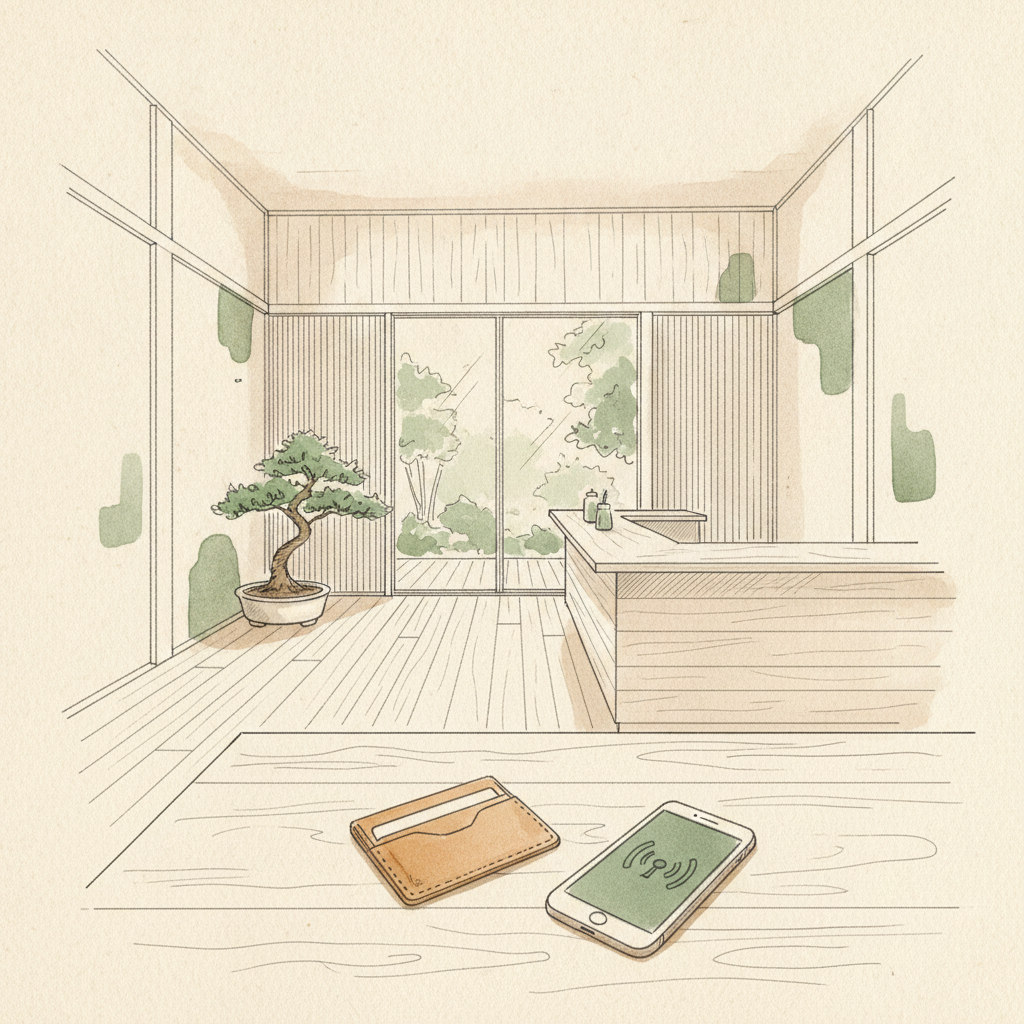
    • Compact Organizers: Opt for slim leather organizers crafted from materials like Japanese pit-tanned leather. These keep cards, cash, and essential documents secure without adding bulk, reflecting an appreciation for enduring quality.
    • Multi-Purpose Tools: Each item in your bag should serve multiple functions or be indispensable. This disciplined approach reduces weight and mental clutter, allowing for greater agility.
    • Thoughtful Materials: Choose items made from natural, resilient materials that age gracefully. This aligns with the Wabi-sabi principle of finding beauty in imperfection and the passage of time.

    Quiet Workspaces: Where Data Meets Focus

    Japan offers a multitude of environments conducive to focused work, from serene cafes to the surprisingly productive atmosphere of a long-distance train. Reliable mobile data, facilitated by an eSIM, transforms these transient spaces into effective offices.

    • Cafe Culture: Many cafes, particularly in larger cities, provide a tranquil backdrop for focused tasks. The hushed conversations and the aroma of roasted coffee create a conducive environment.
    • Train Carriages: The quiet car on a Shinkansen or a local express train can be an ideal place for deep work. The steady motion and limited distractions encourage concentration, supported by robust mobile data.
    • Co-working Spaces: For longer stays, dedicated co-working spaces offer stable internet, ergonomic setups, and a professional atmosphere, often with day-pass options. For more insights on navigating these spaces, consider exploring The Slowmad’s Sojourn: Navigating Japan’s Digital Landscape and Quiet Workspaces.

    The Art of Unburdening

    Reducing physical and digital friction allows for a deeper engagement with the experience of Japan. It frees the traveler from constant logistical concerns, opening space for observation, reflection, and creative thought.

    This intentional approach to travel and work mirrors a broader philosophy of living with less, where each possession, digital or physical, serves a clear purpose. It fosters a quiet efficiency, allowing the journey itself to become part of the creative process.

    Embracing this unencumbered way allows the digital nomad to move through Japan not as a hurried visitor, but as a participant, seamlessly integrated into its rhythms. The focus shifts from what is carried to what is experienced, observed, and created. For further insights into minimalist carry, consider The Geometry of Essentials: Japanese Leather and the Art of Carrying Less.

    Field Notes & Reference

    Explore the Companion Monograph & Curated Objects

    For readers seeking deeper specifications, archival care notes, and selected objects crafted in Japan, explore our full reference edition.

    View the Reference Edition →

    Travel & Connectivity

    Planning field visits to regional workshops across Japan? We rely on Airalo digital eSIMs for reliable local data and seamless navigation without physical SIM swaps.
    Explore Airalo Japan eSIM Plans →

  • The Enduring Imperfection: Kintsugi, Mottainai, and a Life of Less

    The Enduring Imperfection: Kintsugi, Mottainai, and a Life of Less

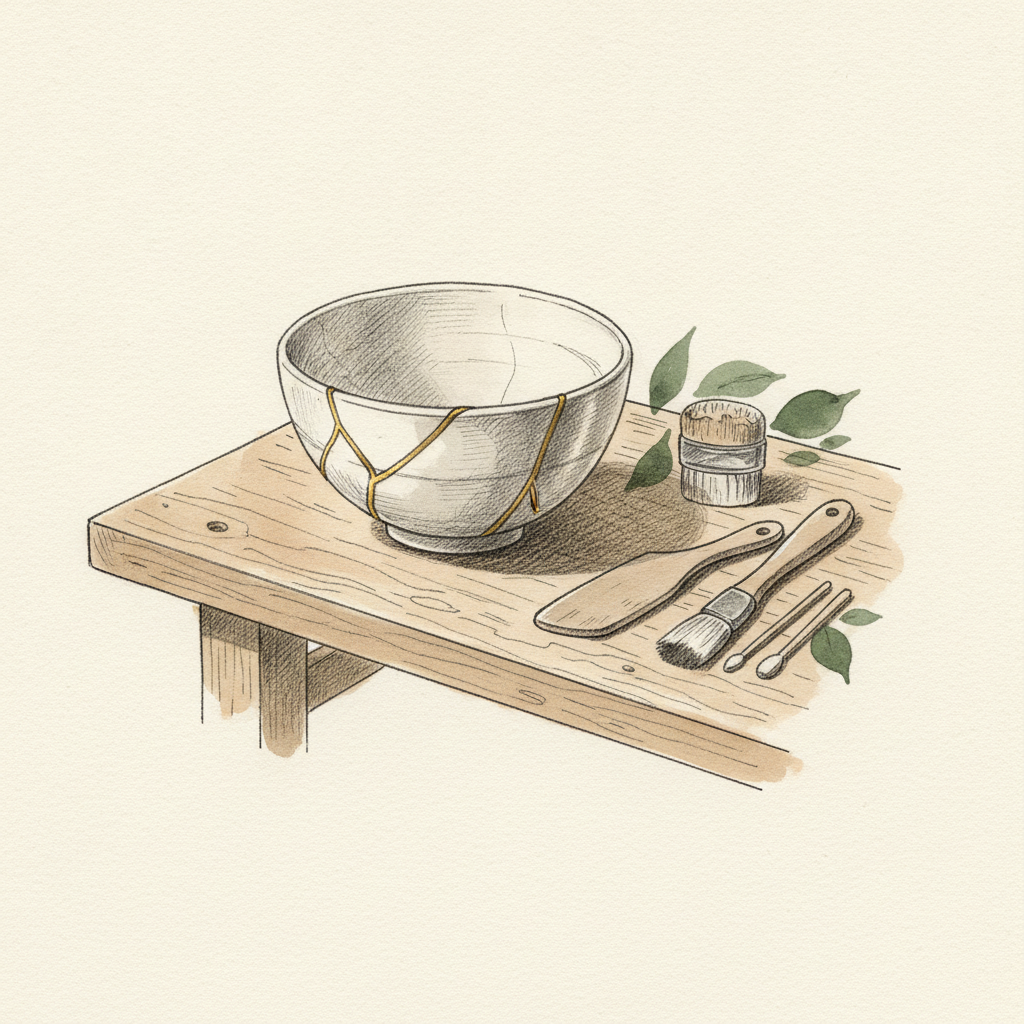
    In a small Kyoto workshop, a master carefully traces a hairline fracture with urushi lacquer, preparing it for a dusting of gold. This ancient practice, kintsugi, transforms breakage into a story of resilience, highlighting rather than hiding the mended seam. It is a quiet defiance against planned obsolescence.

    This reverence for repair extends beyond shattered ceramics, embodying a deeper Japanese philosophy. It speaks to a conscious engagement with objects, recognizing their inherent value and the resources invested in their creation. This mindset encourages a long-term relationship with our possessions.

    The Philosophy of Mottainai: Waste Not, Want Not

    Mottainai, a Japanese term encapsulating regret over waste, is more than mere frugality. It is a profound respect for resources, time, and effort—from the earth’s bounty to human labor. This principle guides choices toward durability and repairability.

    It encourages a shift from disposable convenience to mindful ownership, fostering a deeper connection with what we possess. Choosing well-made items, like those crafted from Japanese pit-tanned leather, aligns directly with this ethos.

    • Respect for Resources: Acknowledging the energy and materials embedded in every item.
    • Mindful Consumption: Prioritizing quality and longevity over transient trends.
    • Extended Lifespan: Embracing repair and maintenance as integral parts of ownership.

    Kintsugi as a Metaphor for Modern Living

    Kintsugi, literally ‘golden joinery,’ elevates an object’s history, scars and all. It suggests that imperfections do not diminish worth but rather add character and unique beauty. This aesthetic can inform our approach to modern goods.

    Instead of discarding, we can seek to understand and repair, fostering a unique narrative with each item. This process reduces the mental load of constant acquisition and disposal, freeing up cognitive space.

    “The broken piece, once discarded, becomes more valuable for having been mended. Its story is not one of flaw, but of enduring beauty.”

    Curating a Repairable Life: Reducing Decision Fatigue

    Choosing goods designed for repair inherently simplifies consumption. When an item can be fixed, the cycle of research, purchase, and disposal is significantly interrupted. This reduces decision fatigue.

    Consider the enduring appeal of Japanese carbon steel knives, which are maintained through sharpening rather than replaced. This intentional choice supports a more sustainable and less mentally taxing lifestyle.

    1. Assess Durability: Prioritize materials and construction built to last.
    2. Identify Repairability: Look for items with accessible parts or repair services.
    3. Learn Basic Maintenance: Embrace simple care routines to extend item life.
    4. Seek Artisanal Quality: Support makers who value longevity and craftsmanship.

    The Quiet Joy of Long-Term Attachment

    When we invest in repairing an object, we deepen our relationship with it. The mended crack or the carefully stitched tear becomes a testament to shared history and care. This fosters a profound sense of attachment.

    This attachment stands in stark contrast to the fleeting satisfaction of new purchases. It cultivates appreciation for the familiar, reinforcing a sense of contentment with what one already possesses. This is a path toward owning less, but valuing more.

    Embracing kintsugi and mottainai in daily life is a subtle act of resistance against the disposable. It is a conscious choice to slow down, to engage with our material world more thoughtfully, and to find beauty in continuity.

    This approach cultivates a richer, more intentional existence, where objects are not just tools or status symbols, but companions on a longer journey. It is a quiet testament to enduring value over fleeting novelty.

  • Bosai EDC: Japanese Preparedness and the Minimalist Travel Kit

    Bosai EDC: Japanese Preparedness and the Minimalist Travel Kit

    In the quiet hum of a Tokyo train, a subtle observation unfolds: the unburdened ease of commuters. Their bags, often compact and well-organized, hint at a philosophy where essentials are not just carried, but curated with intent. This practice, deeply rooted in Japan’s approach to everyday readiness, offers a compelling blueprint for minimalist travel.

    This isn’t about fear, but foresight. The concept of bosai, or disaster preparedness, permeates daily life, subtly influencing the design of public spaces and personal habits. From this culture emerges the bosai pouch—a small, thoughtfully assembled kit that transcends mere emergency supplies to inform a more intentional way of carrying.

    The Philosophy of Readiness: Beyond Emergency

    Japan’s geographical realities have fostered a profound respect for preparedness. This isn’t just about large-scale disaster response; it’s an ingrained awareness that shapes daily choices, from urban planning to personal effects. The bosai mindset encourages a pragmatic assessment of what is truly necessary.

    “True preparedness isn’t about accumulating; it’s about curating. Each item in a bosai kit serves multiple functions, reflecting a deep understanding of resourcefulness.”

    This philosophy extends naturally to everyday carry. By considering potential contingencies, one can strip away the superfluous, leaving only items that offer genuine utility and peace of mind. It’s a lesson in living lightly, informed by a serious purpose.

    Anatomy of the Bosai Pouch: Compact Utility

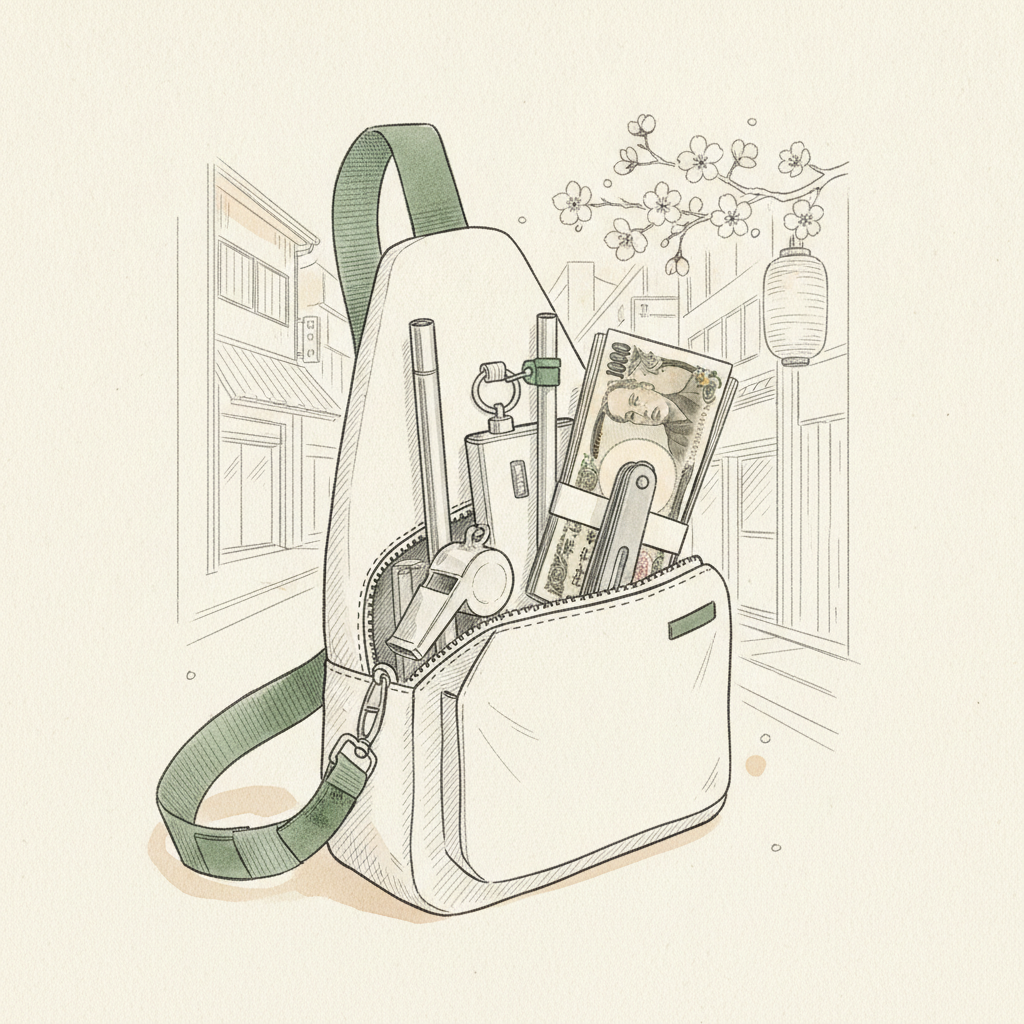
    The bosai pouch is a masterclass in compact efficiency. It is designed to fit seamlessly into a daily bag, providing critical tools without adding significant bulk. The emphasis is always on multi-functionality and robust design, echoing the enduring quality found in Japanese pit-tanned leather longevity care guide.

    • Whistle: Small, high-pitched, for signaling in emergencies.
    • Compact Radio/Charger: Often hand-crank or solar, providing information and device power.
    • Water Filter Straw: Enables safe drinking from various sources.
    • Emergency Cash: Small denominations for situations where digital payments are unavailable.
    • Mini First-Aid Kit: Bandages, antiseptic wipes, pain relievers, and any personal medications.

    These items are chosen for their reliability and minimal footprint. They represent a distilled approach to readiness, applicable whether navigating an urban commute or a remote trail.

    From Bosai to Minimalist Travel: An EDC Blueprint

    Applying the bosai principles to a minimalist travel kit transforms how one packs. The goal shifts from accommodating every perceived need to anticipating core requirements with smart, versatile tools. This approach aligns with the mindful organization explored in The Geometry of Essentials: Japanese Leather and the Art of Carrying Less.

    1. Assess Your Environment: Consider the specific risks and resources of your destination.
    2. Prioritize Multi-Use: Each item should ideally serve more than one function.
    3. Opt for Durability: Choose gear that withstands the rigors of travel and unexpected events.
    4. Maintain Accessibility: Organize your kit so essential items are easily reachable.

    This method encourages a critical evaluation of every item, fostering a deeper connection to one’s possessions. It’s about carrying what truly supports your journey, not what merely fills space.

    The Quiet Confidence of Preparedness

    The ultimate benefit of a bosai-inspired EDC is not just physical readiness, but a profound sense of quiet confidence. Knowing you are equipped for minor inconveniences or significant challenges allows for a more present and engaged experience of the world. It’s a subtle freedom, born from thoughtful preparation.

    This intentional approach to what we carry reflects a larger philosophy of living. It encourages us to consider the enduring value of objects, the wisdom of self-reliance, and the quiet dignity found in being ready for whatever life presents. It’s a journey toward lightness, both in our bags and in our minds.

  • The Geometry of Essentials: Japanese Leather and the Art of Carrying Less

    The Geometry of Essentials: Japanese Leather and the Art of Carrying Less

    In a Kyoto workshop, the scent of vegetable-tanned leather mingles with the faint aroma of cypress. Here, artisans meticulously cut and stitch, transforming thick hides into objects designed for a lifetime of daily use. This process is not merely fabrication; it is a quiet act of intention.

    Each fold and seam anticipates years of pocket friction, body heat, and the subtle patina that tells a story. This approach to carrying essentials reflects a deeper philosophy, one that values durability and considered design over transient trends.

    The Discipline of the Everyday Carry

    The modern world often encourages accumulation, yet the Japanese approach to everyday objects champions restraint. Carrying less is not about deprivation, but about a deliberate curation of tools that serve a purpose and endure. This discipline fosters a clear mind and unburdened movement.

    • Intentionality: Each item in the pocket is chosen for its utility and enduring quality, reflecting a conscious decision to simplify.
    • Ergonomics: Objects are designed to fit the hand and pocket naturally, becoming an extension of the user rather than an extraneous burden.

    Japanese Saddle Leather: A Living Material

    Tochigi leather, known for its dense fibers and deep, natural character, is a prime example of this material philosophy. Unlike chrome-tanned alternatives, its vegetable-tanning process imbues it with a unique ability to develop a rich patina over time. This evolution is a core part of its aesthetic appeal.

    The true beauty of Japanese saddle leather lies not in its initial perfection, but in the stories etched into its surface by the passage of time and touch.

    This material’s structural integrity comes from its natural thickness and the absence of synthetic linings. Hand-stitching, often using methods like saddle stitching, creates a bond stronger than machine-sewn seams, ensuring longevity even under constant stress. For a deeper understanding of these traditional methods, explore “The Enduring Legacy: Why Japanese Pit-Tanned Leather Outlasts and Outshines.”

    • Aging: Body oils and friction from daily use accelerate the darkening and softening of the leather, creating a personalized finish.
    • Durability: The dense cellular structure of vegetable-tanned hides, particularly from regions like Himeji, resists stretching and maintains its form over decades.

    The Architecture of a Minimal Wallet

    A slim, hand-stitched wallet crafted from Japanese saddle leather is more than just a container for currency. It is a miniature architectural piece, designed to hold only the absolute essentials. This design choice encourages a daily edit of pocket contents, fostering a habit of mindful selection.

    1. Assess: Before leaving the house, review wallet contents. Remove unnecessary cards, receipts, or loyalty programs not relevant for the day.
    2. Organize: Arrange essential cards (ID, primary credit card, transit pass) for quick access, reducing fumbling.
    3. Maintain: Periodically clean and condition the leather with a natural balm, ensuring its suppleness and extending its life.

    This deliberate practice resonates with the principles of focus and efficiency found in “Ma and the Mindful Workspace: Cultivating Focus Through Japanese Minimalism.” The compact form factor reduces bulk and encourages a leaner approach to daily carry.

    Cultivating a Lifelong Companion

    The relationship with a well-made leather object is a quiet, evolving partnership. It becomes a tactile record of journeys, decisions, and daily rhythms. This philosophy extends beyond wallets to other everyday items, encouraging a similar discernment in all aspects of life.

    Choosing objects built to last, that improve with age and use, is a subtle act of resistance against disposability. It is a commitment to quality, a respect for craftsmanship, and an embrace of a slower, more intentional way of living.

    Field Notes & Reference

    Explore the Companion Monograph & Curated Objects

    For readers seeking deeper specifications, archival care notes, and selected objects crafted in Japan, explore our full reference edition.

    View the Reference Edition →

  • The Okinawan Rhythm: Sustaining Focus Through Japanese Recovery

    The Okinawan Rhythm: Sustaining Focus Through Japanese Recovery

    The soft light of a spring morning filters through shoji screens in Okinawa, a rhythm of life unfolding with quiet intention. Here, longevity is not merely a genetic lottery but a carefully cultivated art, woven into daily habits that nurture both body and mind.

    This island wisdom offers a compelling counter-narrative to the relentless pursuit of peak performance. It suggests that true endurance comes not from constant output, but from intelligent, integrated recovery.

    Hara Hachi Bu: The 80% Principle

    At the heart of Okinawan dietary practice is hara hachi bu, the principle of eating until one is 80 percent full. This mindful approach to nutrition avoids the energy crash often associated with overeating, maintaining a steady metabolic rhythm throughout the day.

    It is a practice of subtle restraint, fostering a harmonious relationship with food rather than a strict regimen. The goal is to feel satisfied, never overly stuffed, leaving room for the body to digest with ease.

    • Mindful Portioning: Serving smaller amounts, allowing for a second helping if truly needed, rather than starting with an overflowing plate.
    • Slow Eating: Chewing thoroughly and pausing between bites allows the body time to register fullness, typically around 20 minutes.

    Post-Meal Movement & Green Tea Rituals

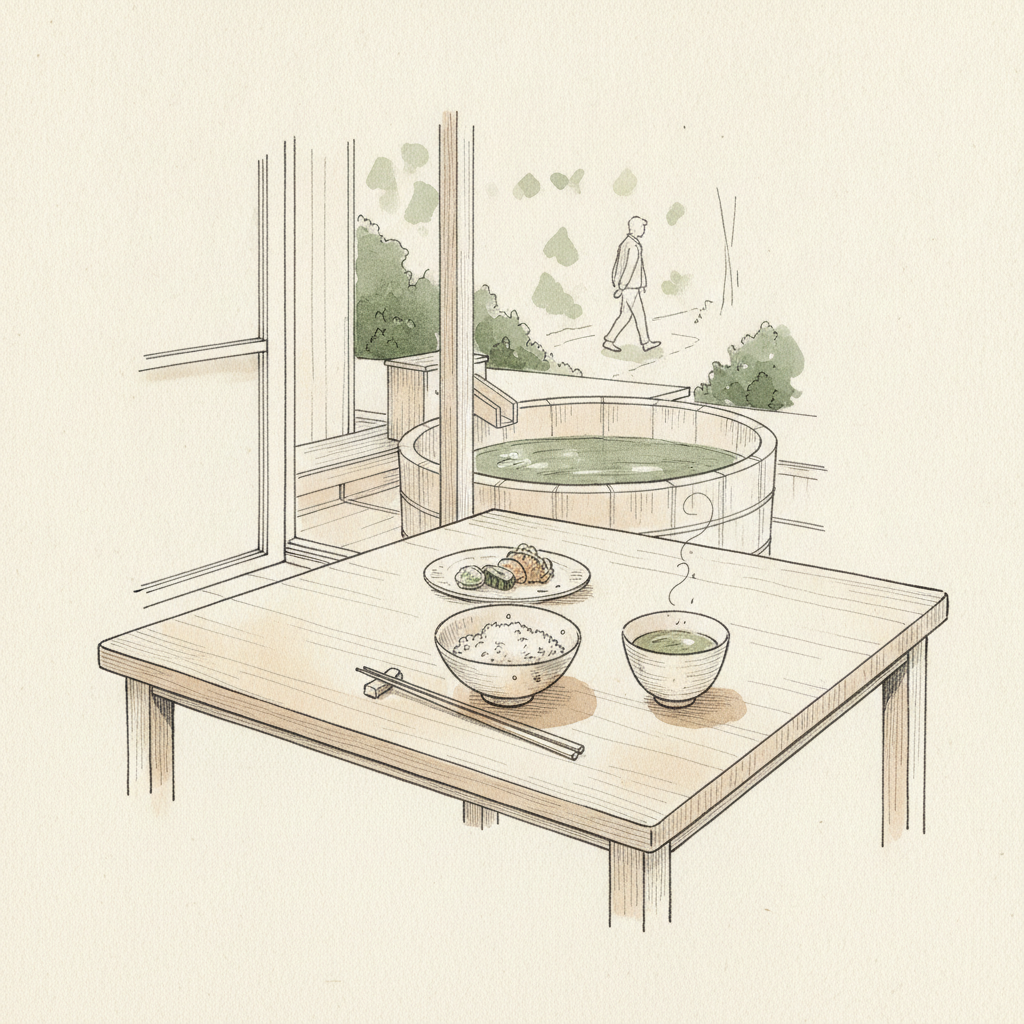
    Immediately after a meal, Okinawans often engage in a short, gentle walk. This simple habit aids digestion, regulates blood sugar, and prevents the post-lunch slump that can derail an afternoon’s work.

    This gentle movement is a profound contrast to the sedentary habits prevalent in many modern workplaces. It’s a quiet recalibration, preparing the mind for renewed focus, much like the precise preparation of a workspace described in Ma and the Mindful Workspace: Cultivating Focus Through Japanese Minimalism.

    Following this, a cup of green tea, particularly matcha or sencha, is common. The L-theanine in green tea provides a calm, sustained alertness without the jitters of excessive caffeine, supporting deep cognitive work.

    “True productivity is not about working harder, but about working smarter, and resting with greater intention.”

    • L-theanine Benefits: Promotes alpha brain waves, associated with relaxed alertness and improved focus, ideal for sustained concentration.
    • Timing: Consume green tea 30-60 minutes after a meal to aid digestion and leverage L-theanine’s calming effects.

    Ofuro: The Evening Bathing Ritual

    As evening approaches, the Japanese bathing ritual, ofuro, becomes central to recovery. This deep soak in hot water, often preceded by a thorough wash, is more than hygiene; it is a profound act of physical and mental unwinding.

    This practice signals to the body and mind that the day’s demands are receding, preparing for restorative sleep. The warmth penetrates muscles, releasing tension, and calming the nervous system.

    1. Preparation: Cleanse the body thoroughly with soap and water outside the tub before entering.
    2. Soak: Immerse yourself in hot water (typically 38-42°C or 100-108°F) for 15-20 minutes, allowing the heat to relax muscles and open pores.
    3. Mindfulness: Use this time for quiet reflection, detaching from the day’s events, and focusing on breath.

    Measuring Recovery: HRV and Deep Sleep

    For health-conscious individuals tracking metrics like Heart Rate Variability (HRV) and deep sleep, these Japanese recovery habits offer measurable benefits. Consistent ofuro can significantly improve deep sleep cycles, reducing sleep latency and increasing restorative phases.

    The combination of hara hachi bu, post-meal walks, green tea, and ofuro works synergistically. It creates a holistic system that supports the parasympathetic nervous system, leading to higher HRV scores—an indicator of better recovery and resilience, essential for founders and remote professionals engaged in intentional work, much like the continuous improvement cycles discussed in The Solopreneur’s Kaizen: Adapting Toyota’s Continuous Improvement for One-Person Operations.

    The quiet wisdom of Okinawa reminds us that sustaining deep focus is not about pushing harder, but about cultivating a life balanced with intentional pauses. These everyday practices, refined over generations, offer a gentle yet powerful path to enduring vitality.

    They are a subtle invitation to integrate moments of thoughtful recovery, transforming the ordinary into a profound act of self-care and sustained presence.

  • The Slowmad’s Sojourn: Navigating Japan’s Digital Landscape and Quiet Workspaces

    The Slowmad’s Sojourn: Navigating Japan’s Digital Landscape and Quiet Workspaces

    Japan offers a unique cadence for the discerning slowmad, a place where ancient traditions seamlessly intertwine with hyper-modern efficiency. This guide distills the essentials for a productive and culturally immersive stay, ensuring your focus remains on deep work and meaningful exploration.

    From seamless connectivity to serene work havens, preparing for your arrival with intention will unlock the true potential of remote work within this captivating archipelago. It is about embracing a deliberate pace, much like the mindful approach to craftsmanship.

    Seamless Connectivity: eSIMs and IC Cards

    Establishing reliable connectivity is paramount for any remote worker. While pocket Wi-Fi devices were once the standard, modern eSIM technology now offers a more streamlined and efficient solution for high-speed data access across Japan.

    • eSIM Advantage: Opt for a reputable eSIM provider like Ubigi or Airalo for immediate, high-speed data upon arrival. This eliminates the hassle of device rentals and ensures consistent connectivity for navigation and communication.
    • Physical SIM Alternatives: For longer stays, a physical SIM from providers like Mobal or IIJmio can be cost-effective, but requires an unlocked phone and a slightly more involved setup process post-arrival. Evaluate your stay duration and data needs.

    Beyond data, the integrated circuit (IC) card is your indispensable companion for transit and small purchases. Think of it as your digital wallet for everyday Japanese life, simplifying countless interactions.

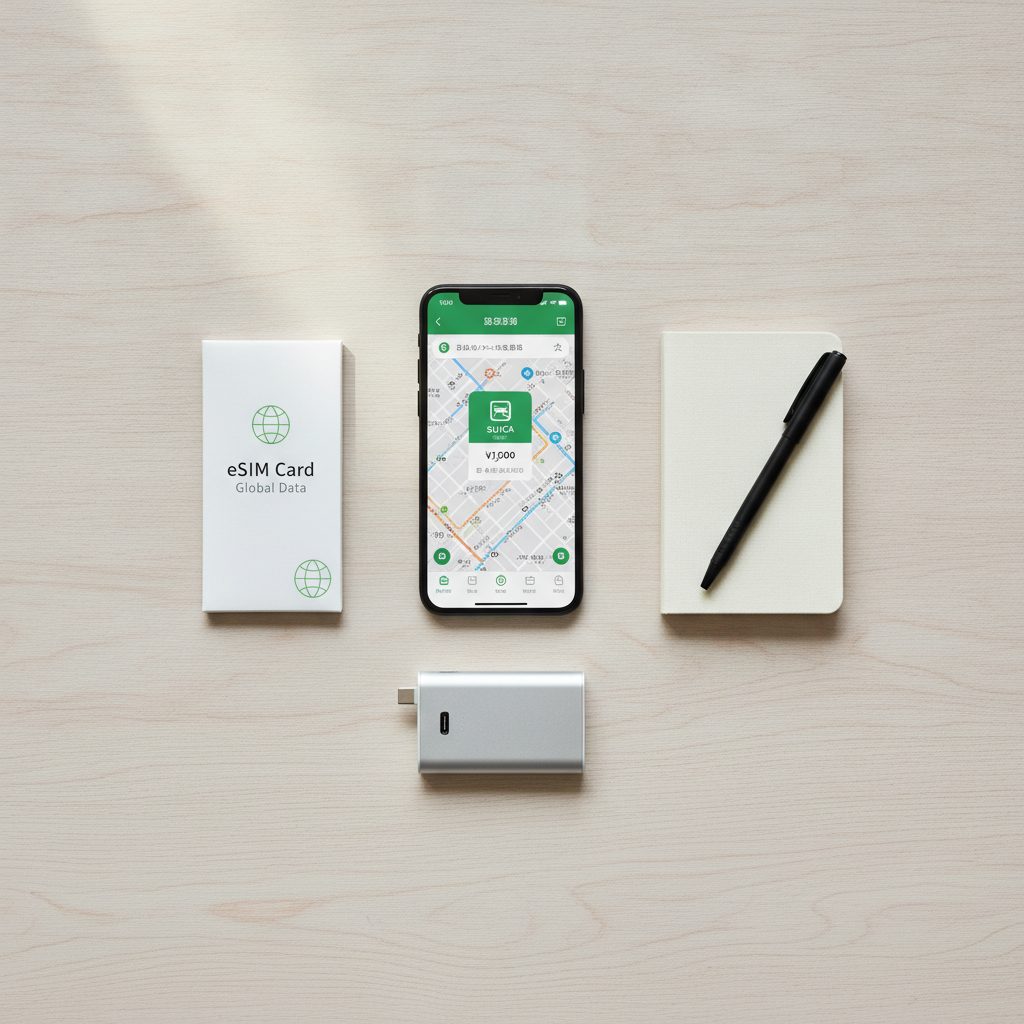
    • Mobile Suica/ICOCA: Set up Mobile Suica (for iOS) or Mobile ICOCA (for Android) on your smartphone before you land. Link it to Apple Pay or Google Pay for effortless top-ups and tap-and-go convenience on trains, buses, and at konbini.
    • Physical IC Cards: If your phone isn’t compatible, purchase a physical Suica or ICOCA card at any major JR station. While less seamless than mobile versions, they are still far more convenient than buying individual tickets.

    Cultivating Focus: Quiet Work Cafes and Coworking Spaces

    Japan excels in spaces designed for quiet contemplation and focused work, a testament to its cultural appreciation for concentration. Finding your ideal work environment is key to maintaining productivity while absorbing local nuances.

    “The Japanese concept of ‘Ma’ — the intentional pause or negative space — extends beautifully to workspaces, fostering environments conducive to deep focus and creative thought.”

    Kissaten, traditional Japanese coffee shops, offer a unique, subdued atmosphere. They are ideal for focused tasks, though prolonged laptop use might be less common than in dedicated coworking spaces.

    • Kissaten Etiquette: Order a drink and perhaps a light snack. Keep your voice low, take calls outside, and limit your stay to a few hours during peak times. These are places for quiet enjoyment, not loud collaboration.

    For more extended work sessions and reliable power outlets, coworking spaces are an excellent choice. Major cities like Tokyo, Osaka, and Kyoto boast numerous options, from modern, minimalist hubs to more casual, open-plan environments.

    Tax-Free Shopping and Intentional Purchases

    Japan offers a compelling tax-free shopping program for temporary visitors, allowing you to reclaim the 10% consumption tax on eligible purchases. This is particularly advantageous for high-value items or souvenirs.

    • Eligibility: You must be a non-resident staying in Japan for less than six months. Present your passport with a temporary visitor stamp at participating stores (look for the “Tax-Free” logo).
    • Minimum Spend: A minimum purchase of ¥5,000 (excluding tax) at a single store on the same day is typically required for general goods. Consumables (food, cosmetics, etc.) also have a ¥5,000 minimum but must be sealed.

    Consider investing in quality items that align with your slowmad philosophy. Perhaps some exquisite The Analog Advantage: Japanese Stationery as a Shield Against Digital Burnout to enhance your workflow, or a beautifully crafted piece for your home.

    An Arrival Checklist for the Discerning Slowmad

    1. eSIM Activation: Purchase and activate your Japan eSIM before departure. Test it upon landing to ensure immediate connectivity.
    2. Mobile IC Card Setup: Load Mobile Suica or ICOCA onto your smartphone and link it to your preferred payment method for effortless transit.
    3. Cash Essentials: While Japan is increasingly cashless, carry some yen for smaller establishments, vending machines, and emergencies. ATMs are widely available.
    4. Portable Charger: A quality power bank is indispensable for long days of exploration and remote work, keeping your devices charged on the go.
    5. Noise-Canceling Headphones: Essential for maintaining focus in cafes or during travel, creating your own portable sanctuary of calm.
    6. Work Essentials: Pack a lightweight, ergonomic setup. Consider a portable monitor or compact keyboard if your work demands it. Embrace a minimalist approach to your gear.

    Embracing the slowmad lifestyle in Japan is about more than just working remotely; it is about intentional immersion. By streamlining your digital and logistical needs, you create space for deeper engagement with the culture, the people, and the profound sense of peace that permeates daily life here.

    This deliberate approach, much like the continuous improvement found in Japanese manufacturing, allows for a richer, more productive, and truly transformative experience. Japan awaits, ready to inspire both your work and your wanderlust.

  • The Solopreneur’s Kaizen: Adapting Toyota’s Continuous Improvement for One-Person Operations

    The Solopreneur’s Kaizen: Adapting Toyota’s Continuous Improvement for One-Person Operations

    The ethos of Kaizen, the Japanese philosophy of continuous improvement, often conjures images of bustling factory floors and complex corporate structures. Yet, its core principles of incremental refinement and waste elimination hold profound relevance for the modern solopreneur, indie hacker, or freelance creative.

    Stripped of bureaucracy, the one-person enterprise offers a unique canvas for direct application of Kaizen. Here, every process, every decision, and every minute directly impacts output. The opportunity for agile, personal optimization is not just possible, but essential for sustainable growth.

    Demystifying Kaizen for the Solo Operator

    Kaizen, literally meaning “change for the better,” is not about radical overhaul but a consistent, small-scale pursuit of perfection. For the solopreneur, this translates into a daily commitment to observing, analyzing, and enhancing your personal workflow.

    It’s about fostering an internal culture of questioning: “Is there a better way?” This mindful approach ensures that even as you scale, your foundational processes remain robust and efficient. It’s a subtle but powerful shift from reactive problem-solving to proactive optimization.

    Eliminating “Muda”: The Waste in Your Workflow

    Toyota identified seven types of waste (Muda) that plague production. For the solo operator, these often manifest as digital clutter, inefficient transitions, or redundant tasks. Identifying and removing these small frictions frees up invaluable time and mental energy.

    • Overproduction: Creating content or features before they are needed, leading to unused assets.
    • Waiting: Delays caused by slow software, unorganized files, or procrastination on critical inputs.
    • Unnecessary Transport: Excessive digital file transfers, email chains, or context switching between applications.
    • Over-processing: Adding more detail or complexity than required for a task’s objective.
    • Excess Inventory: Hoarding unused templates, half-finished projects, or unread resources.
    • Unnecessary Motion: Excessive mouse clicks, searching for files, or inefficient keyboard shortcuts. The Analog Advantage: Japanese Stationery as a Shield Against Digital Burnout offers insights into minimizing digital motion.
    • Defects: Errors in work requiring rework, caused by rushing or lack of clear process.

    “The solo Kaizen practitioner understands that small inefficiencies, compounded daily, become insurmountable obstacles over time.”

    The 15-Minute Daily Workflow Audit

    Implementing Kaizen doesn’t demand hours of strategic planning. A focused 15-minute daily audit can yield significant improvements. This ritual encourages a habit of self-reflection and process refinement, akin to sharpening a well-loved tool. The Edge of Precision: Mastering Japanese Carbon Steel Knives and the Art of Whetstone Sharpening speaks to the value of daily maintenance.

    1. Review Yesterday’s Friction: At the start of your day, recall any points of resistance, frustration, or delay from the previous day’s work. What felt clunky?
    2. Identify One “Muda” Target: Select just one small waste to address. This could be a recurring search for a file, an extra step in a common task, or a distraction source.
    3. Brainstorm a Micro-Improvement: Devise a simple, immediate solution. Can you create a shortcut, a template, or a new habit? Don’t overthink it.
    4. Implement & Document (Briefly): Put the change into practice immediately. Jot down the change in a simple text file or notebook. This reinforces the habit and creates a log of your improvements.
    5. Observe & Adapt: Over the next few days, notice if your change had the desired effect. If not, iterate. Kaizen is a loop, not a linear path.

    Poka-Yoke: Error-Proofing Your Solo System

    Poka-yoke, or error-proofing, is about designing processes that prevent mistakes from happening in the first place. For the solopreneur, this means building safeguards into your digital and physical environment to reduce oversight and rework.

    Consider setting up automated checks, creating mandatory checklists for complex tasks, or designing your digital workspace to minimize distractions. Ma and the Mindful Workspace: Cultivating Focus Through Japanese Minimalism offers excellent principles for designing such an environment.

    • Automated Backups: Prevent data loss by scheduling regular cloud backups.
    • Checklist for Launches: Before publishing, ensure all elements (links, images, SEO) are verified.
    • Template Use: Standardize recurring tasks with templates to avoid missed steps or inconsistent quality.
    • Time Blocking: Dedicate specific blocks for focused work to prevent context-switching errors.
    • Clear Naming Conventions: Implement a consistent file and folder naming system to prevent misplacing assets.

    The journey of continuous improvement, though often associated with large-scale manufacturing, is profoundly personal for the solo operator. It’s about cultivating a mindset of deliberate refinement, transforming daily frictions into opportunities for growth.

    By embracing Kaizen, even in its smallest forms, solopreneurs don’t just optimize their businesses; they cultivate a more intentional, less stressful, and ultimately more rewarding creative life. The pursuit of better is a journey without end, and it begins with a single, mindful step.

  • Ma and the Mindful Workspace: Cultivating Focus Through Japanese Minimalism

    Ma and the Mindful Workspace: Cultivating Focus Through Japanese Minimalism

    In an era of relentless digital noise and constant notifications, the pursuit of a sanctuary for focused work has become paramount. Our environments profoundly shape our productivity and mental clarity, yet many workspaces remain cluttered, chaotic reflections of our busy lives.

    This is where the Japanese aesthetic principle of Ma (間) offers a profound antidote. It’s not merely about emptiness, but about the intentional placement of objects and the purposeful inclusion of negative space, allowing elements to breathe and attention to settle.

    The Philosophy of Ma: Beyond Bare Walls

    Western minimalism often defaults to stark, often cold, austerity. Surfaces are cleared, colors are muted, and the goal is often an absence of visual stimuli. While effective in its own right, this approach can sometimes feel devoid of warmth or personality, bordering on the clinical.

    Ma, however, introduces a nuanced appreciation for the spaces between things. It’s the pause in music, the silence in conversation, or the empty space in a painting that gives form to the subject. This intentional void creates a sense of calm, inviting contemplation and deep focus.

    “Ma is an emptiness full of possibilities, a space for the mind to wander and create, not merely an absence of clutter.”

    Decoding the Distraction-Free Desk

    Applying Ma to your workspace transcends simple decluttering. It’s about curating an environment that supports your cognitive processes, reducing visual friction and psychological load. Every item on your desk should earn its place, serving a clear purpose or evoking a sense of calm.

    Consider the tactile experience of your tools. The deliberate choice of well-crafted items, like a finely balanced pen or a substantial notebook, can elevate routine tasks into mindful acts. This philosophy extends to The Analog Advantage: Japanese Stationery as a Shield Against Digital Burnout, where physical tools foster deeper engagement.

    The Contrast: Sterile vs. Serene

    Many modern offices, despite attempts at minimalism, often feel sterile due to their reliance on synthetic materials and harsh lighting. Ma encourages a connection to nature, integrating organic textures and ambient illumination that soothe the senses rather than jarring them.

    This approach aligns with a broader philosophy of intentional living, where quality over quantity reigns supreme. Just as a chef selects The Edge of Precision: Mastering Japanese Carbon Steel Knives and the Art of Whetstone Sharpening for their work, we should choose our tools with similar discernment.

    A 5-Step Protocol for a Ma-Inspired Workspace

    Transforming your desk into a haven of focus requires a methodical yet mindful approach. Embrace this protocol to cultivate an environment that supports deep work and creative flow.

    1. Define Your Core Essentials: Remove everything from your desk. Only return items you use daily or that genuinely inspire you. Be ruthless; if it’s not essential, it belongs elsewhere.
    2. Embrace Natural Materials: Introduce elements of natural wood, stone, or ceramic. A solid wooden desk, a handcrafted pen holder, or a small ceramic coaster can ground your space and add warmth.
    3. Optimize for Warm Lighting: Ditch harsh overhead fluorescents. Opt for soft, diffused light sources like a desk lamp with a warm LED bulb or indirect ambient lighting. This creates a cozy, inviting atmosphere conducive to concentration.
    4. Conceal the Clutter: Utilize discrete storage solutions for cables, papers, and less frequently used items. Woven baskets, elegant trays, or simple drawers keep visual noise at bay without sacrificing accessibility.
    5. Integrate Greenery & Art (Sparingly): A single, well-chosen plant or a piece of art can add life and personality. Ensure it enhances the sense of calm rather than creating another focal point for distraction. The key is thoughtful placement, not proliferation.

    Cultivating a Lasting Practice

    Implementing Ma in your workspace is not a one-time event but an ongoing practice. Regularly assess your desk’s efficacy, removing new accumulations and refining your setup as your needs evolve.

    By consciously designing your environment with Ma in mind, you’re not just decluttering a desk; you’re cultivating a state of mind. This intentional approach fosters greater focus, reduces stress, and ultimately elevates the quality of your work and daily life.